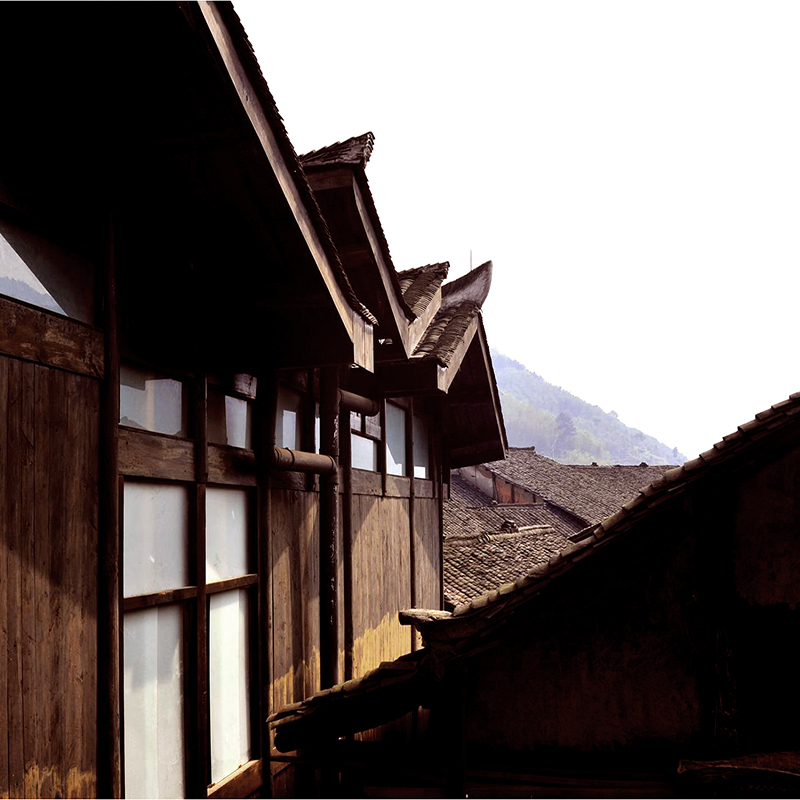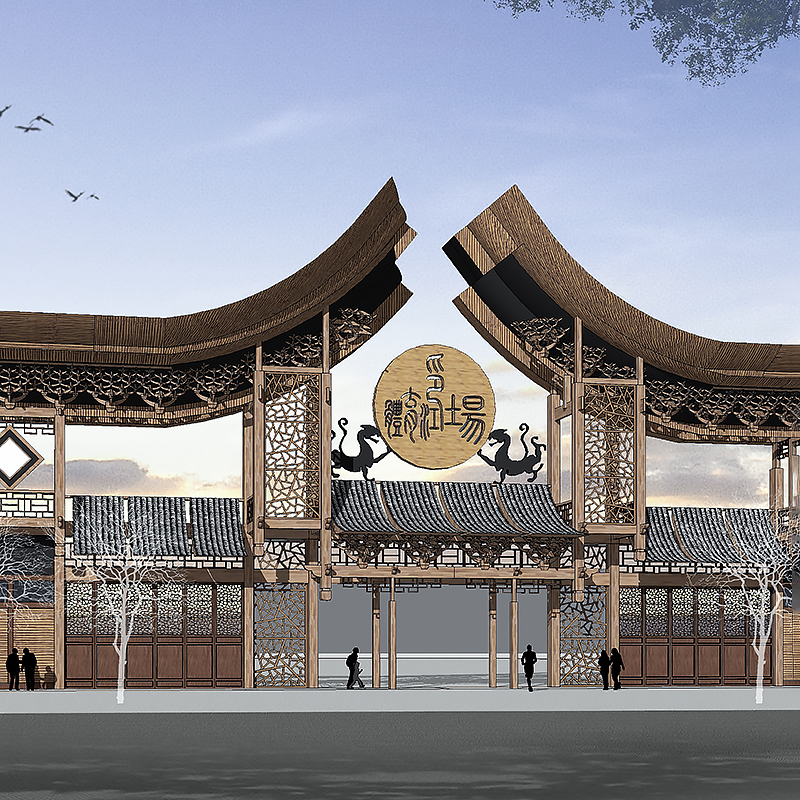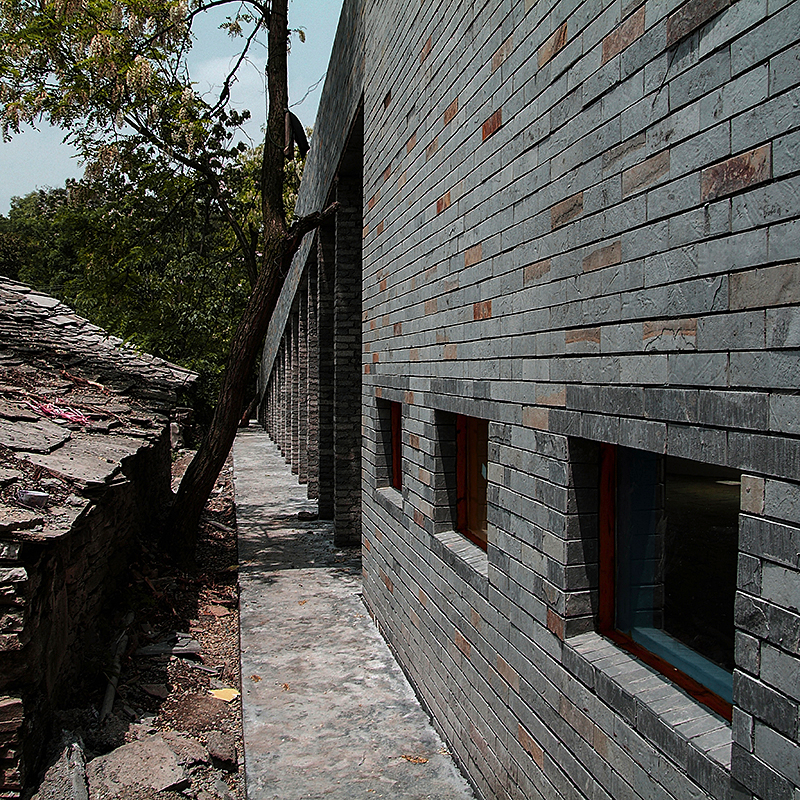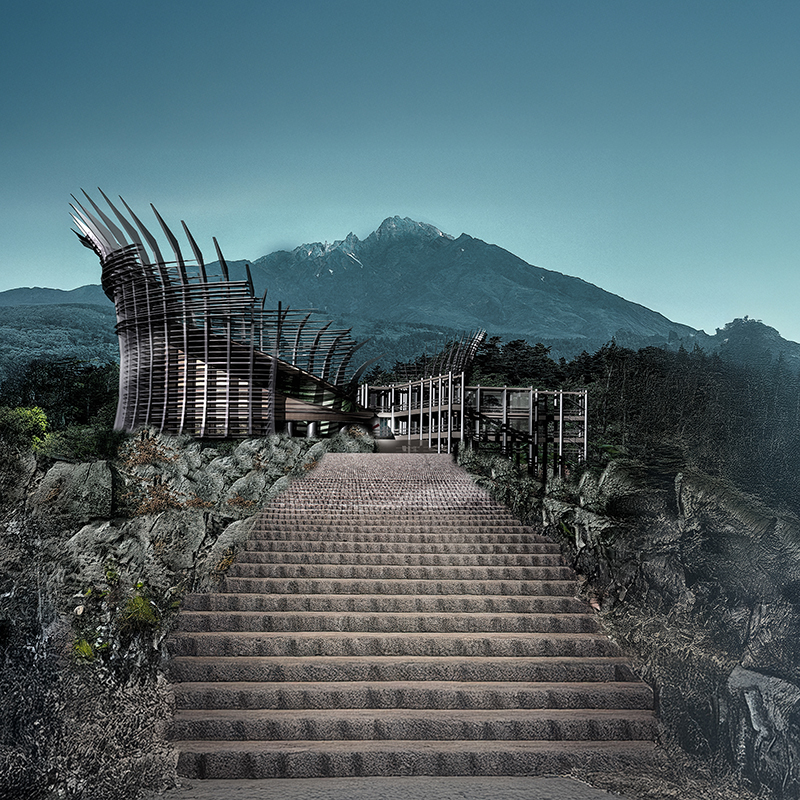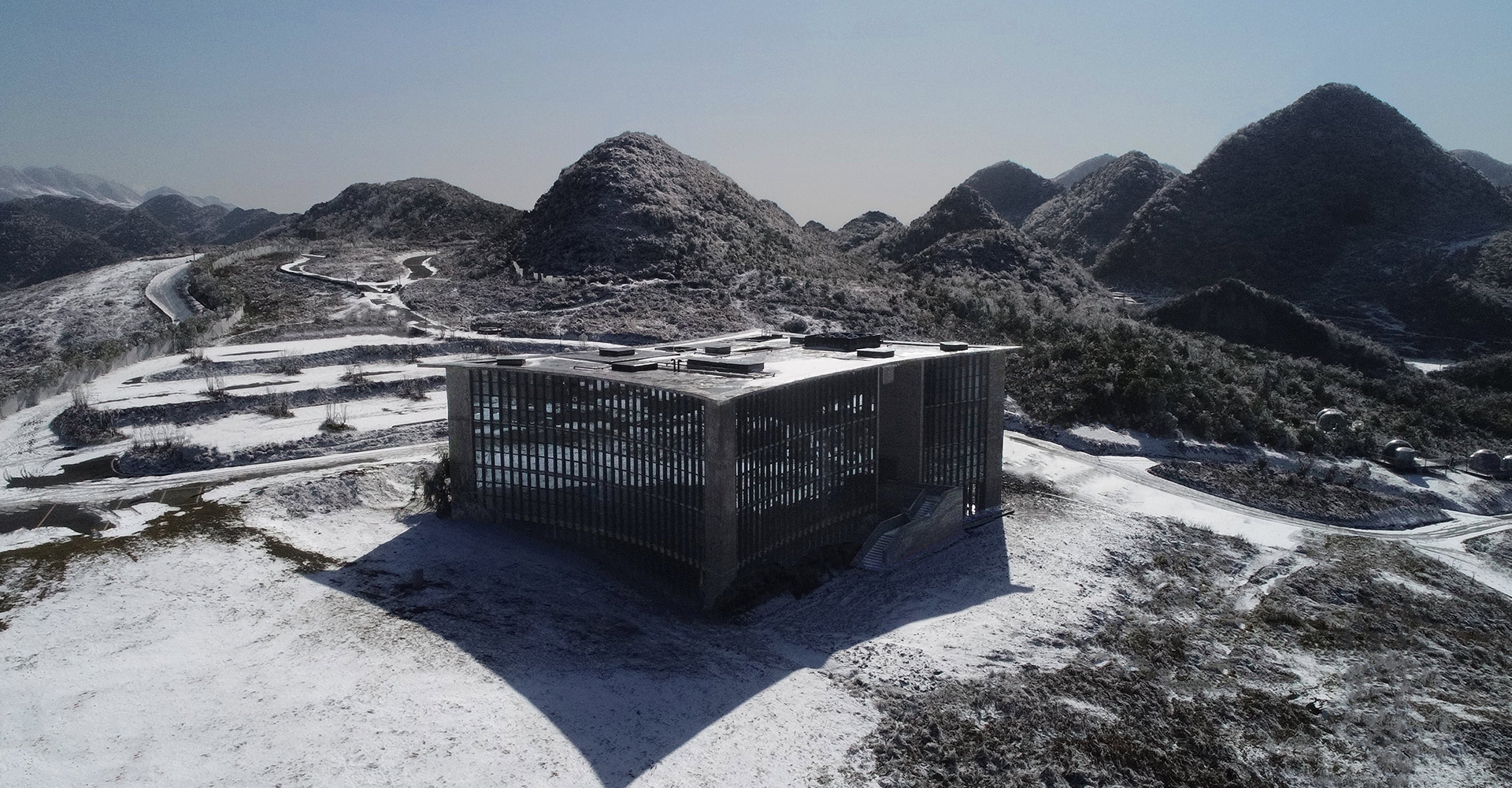
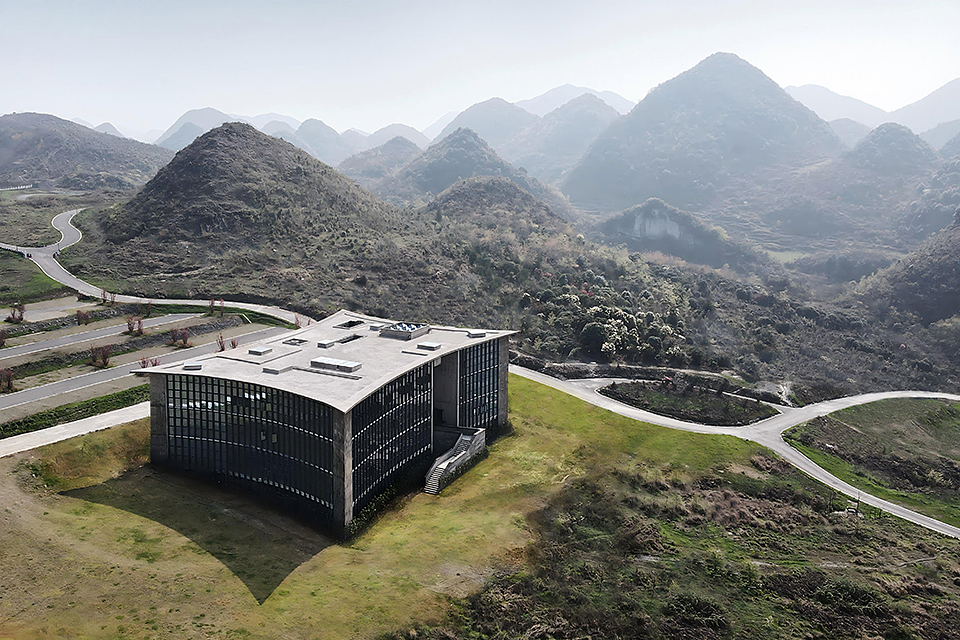
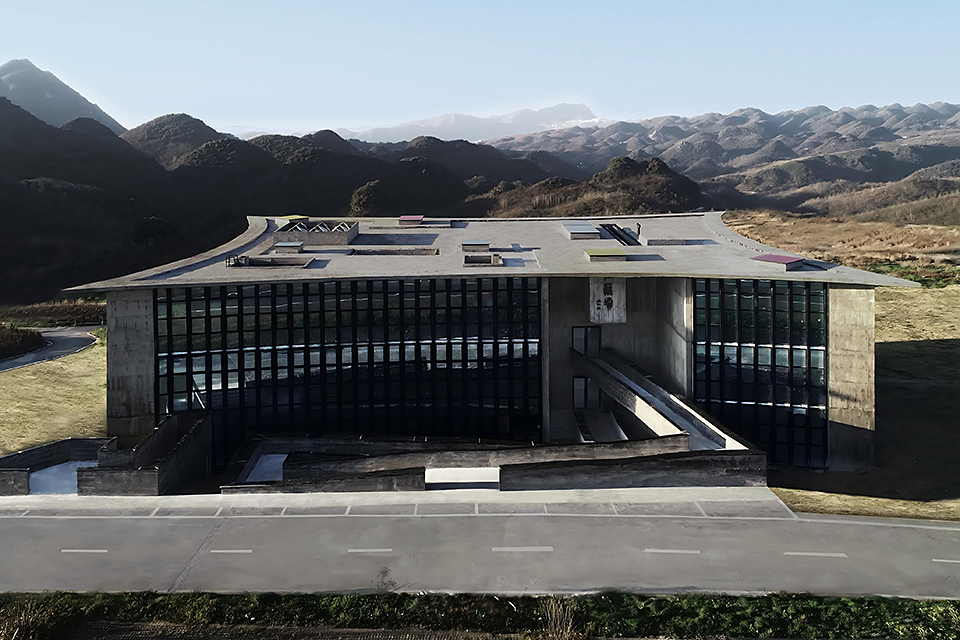

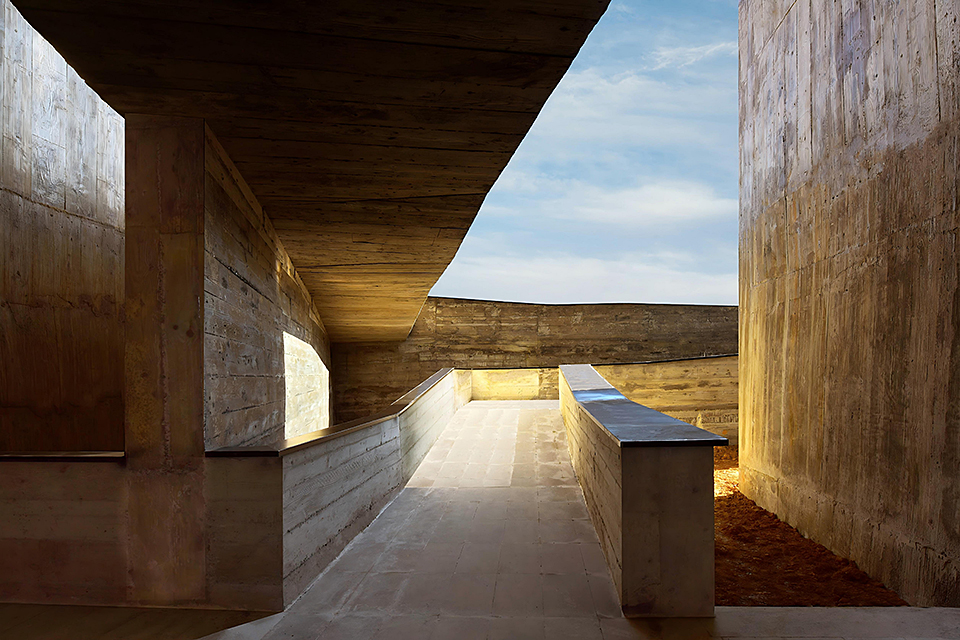

Cuisuba Yi Culture and Visitor Center is located in the karst peak-cluster landscape at an altitude of about 2,000 meters. With a severely limited construction area, the design follows the natural 15–30° north-facing slope, rising vertically to form a “solitary peak” that confronts the surrounding mountains, composing a distinctive landscape structure of “peak–grassland–mountains.” The surrounding alpine meadow has long been a sacred site for Yi people’s rituals and Torch Festival celebrations, endowing the building with the symbolic presence of both altar and monument.
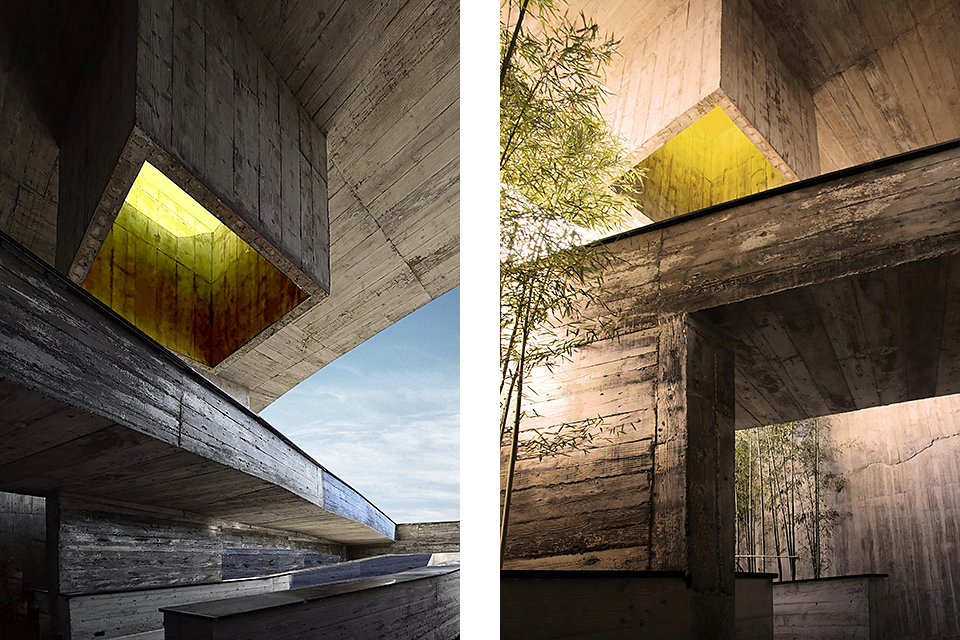
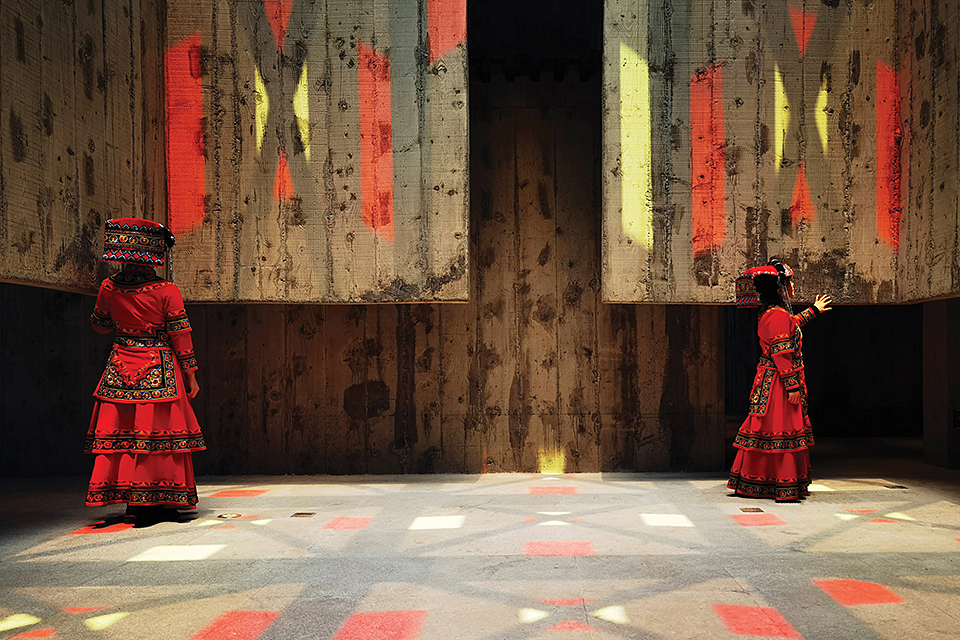
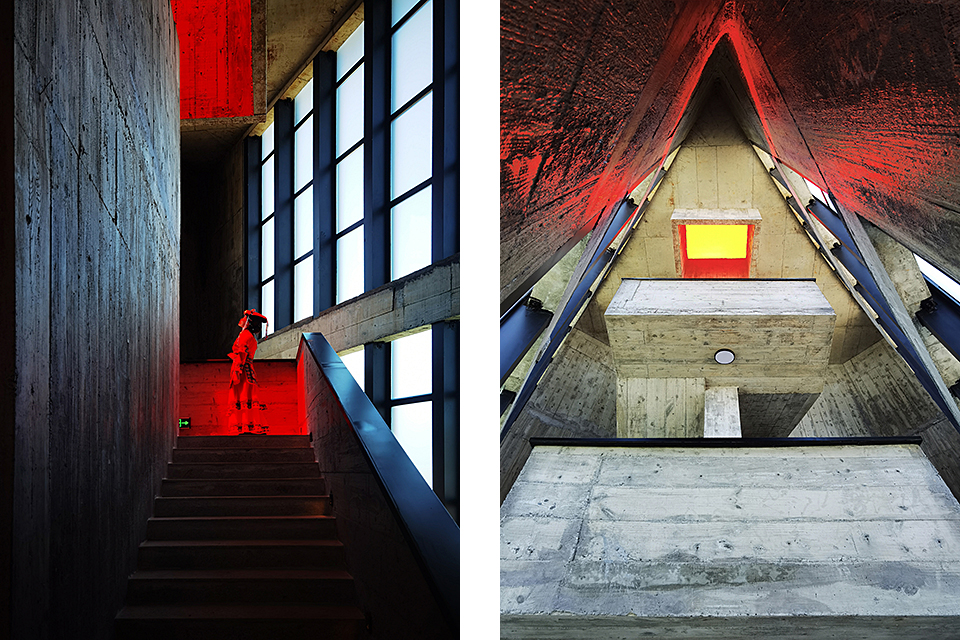
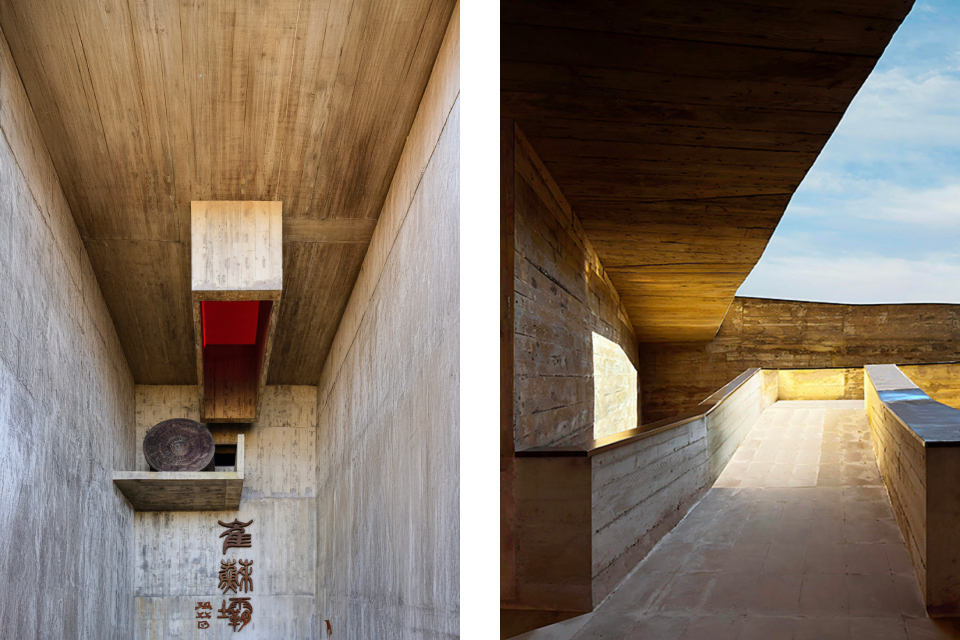
The design expresses Yi cultural spirit through three spatial systems: (1) the “Fire Procession” circulation system, composed of folded ramps and ritual stairways that evoke the soul’s journey along the “heavenly path”; (2) the “Sacrificial Courtyard” system, featuring suspended light wells recalling ancestral worship; and (3) the “Sky Pan” courtyard system, where roof gutters and open-air patios collect rainwater as a metaphor for the origin of life. Interwoven with functional units, these systems create a spatial organization reminiscent of traditional Yi villages, blending ritual solemnity with sacred atmosphere.
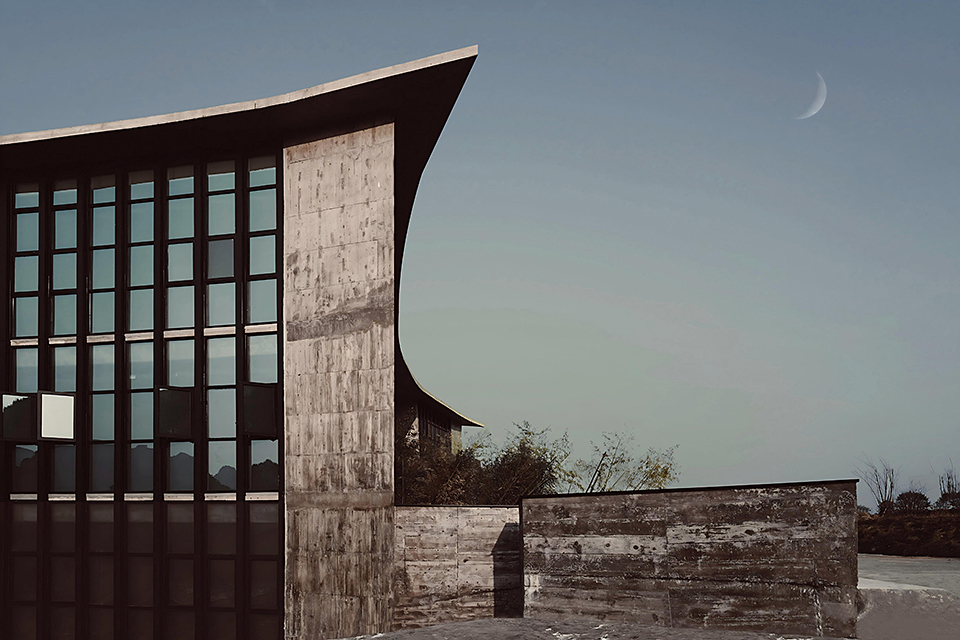
Constructed from exposed concrete made with local sandstone aggregate, the building’s surfaces bear hand-imprinted textures of traditional Yi timber houses, merging ancient character with contemporary form. Integrating ritual structure and modern function, the Yi Culture Center stands as an unwritten monument on the plateau—an architectural vessel of collective memory, shared history, and enduring spiritual legacy.

Copyright © 2025 West-line studio. All Rights Reserved|Privacy Policy|Prerms of Service