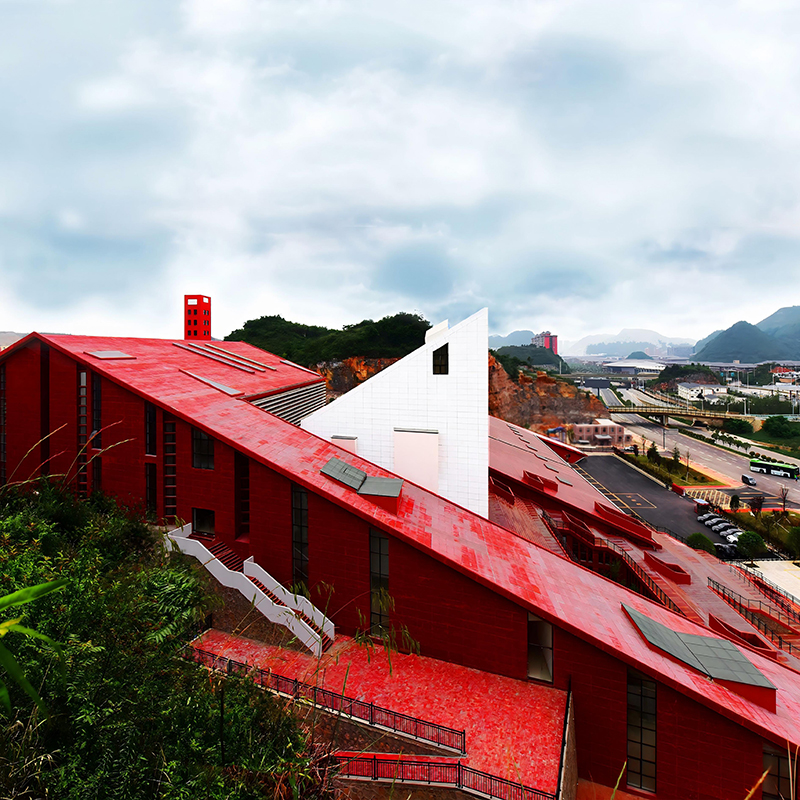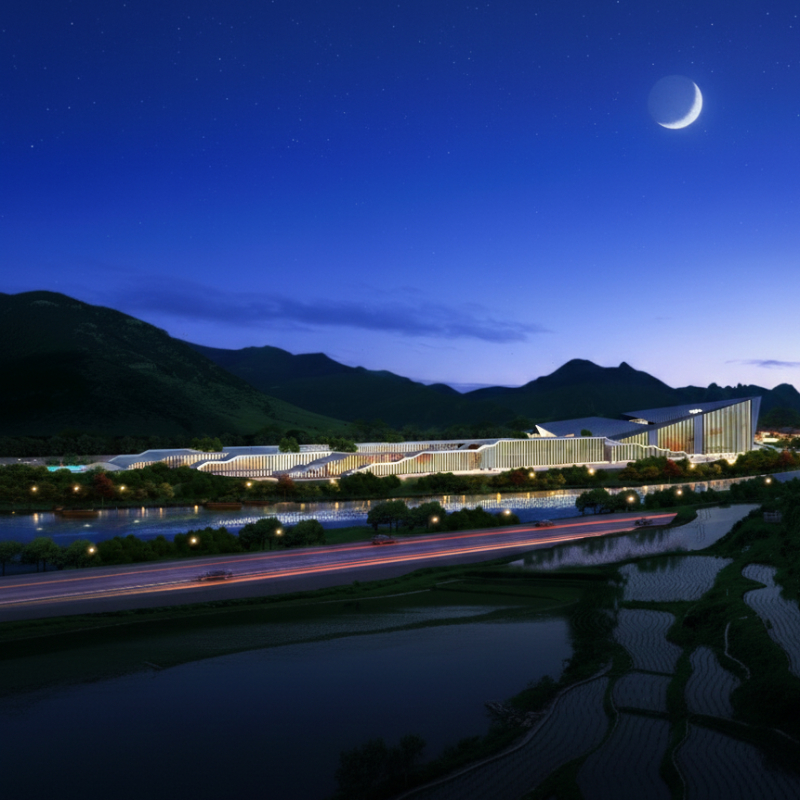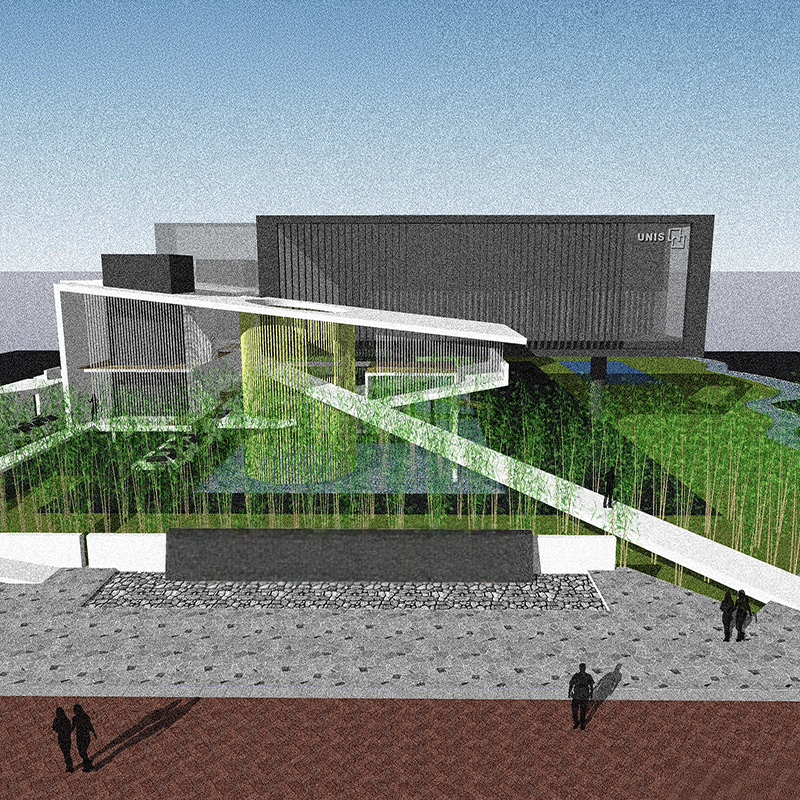


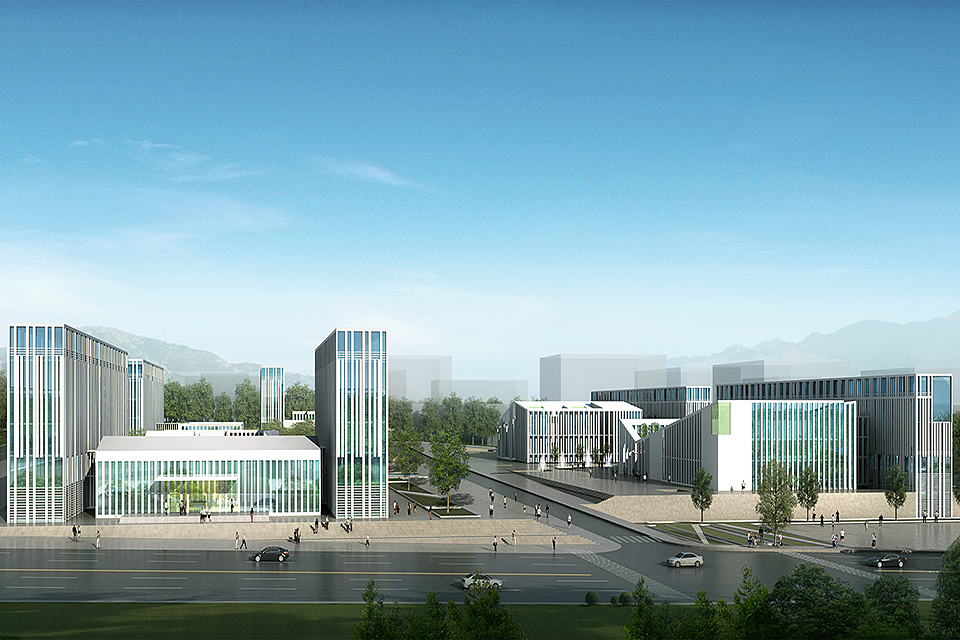
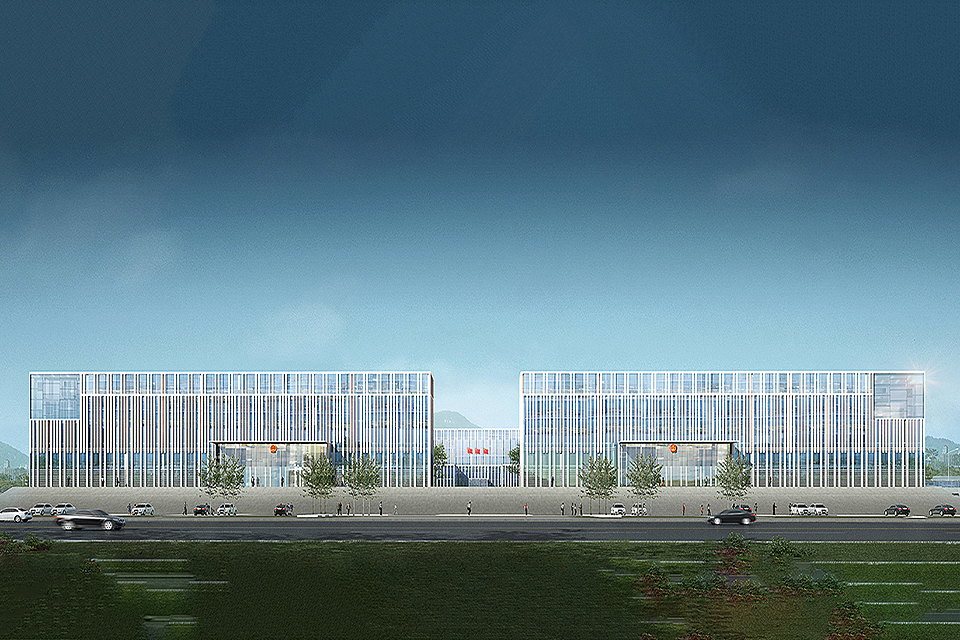
The design is guided by the core principles of “modernity, dignity, and ecology,” aiming to create a government building complex that integrates functional efficiency with a clear expression of public identity.
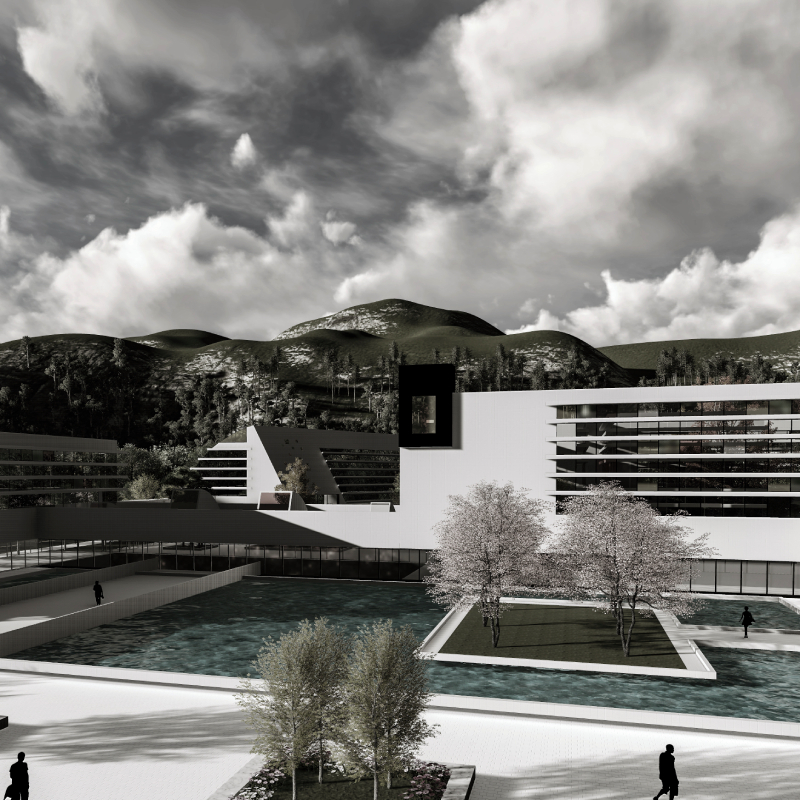
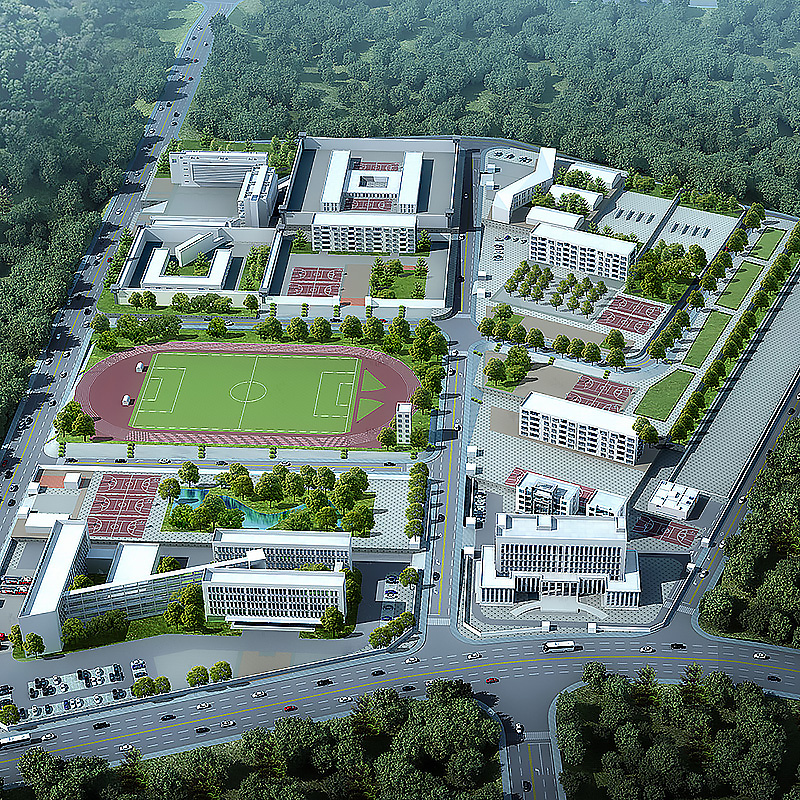
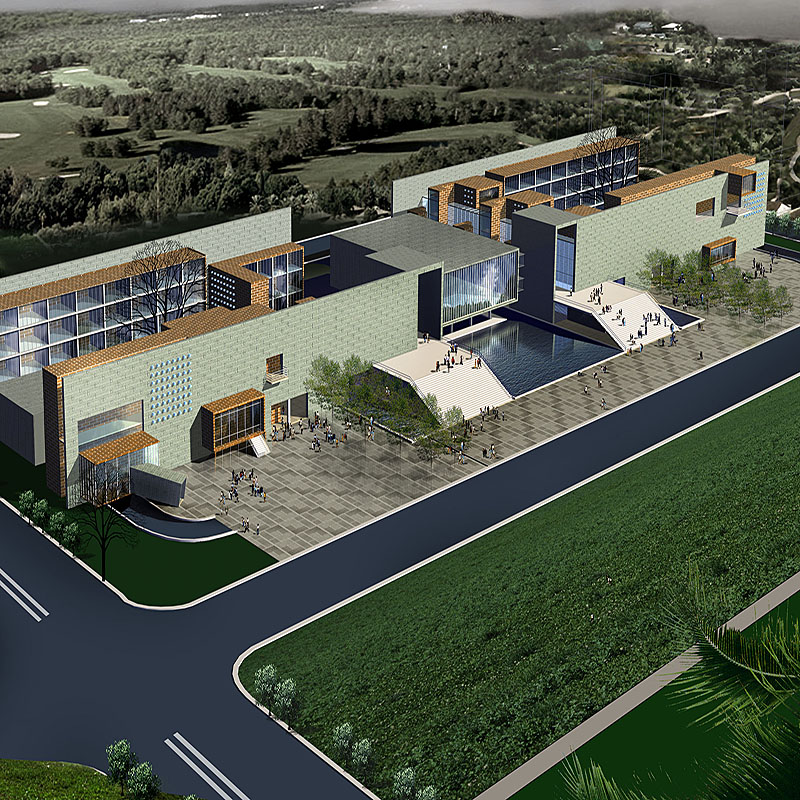
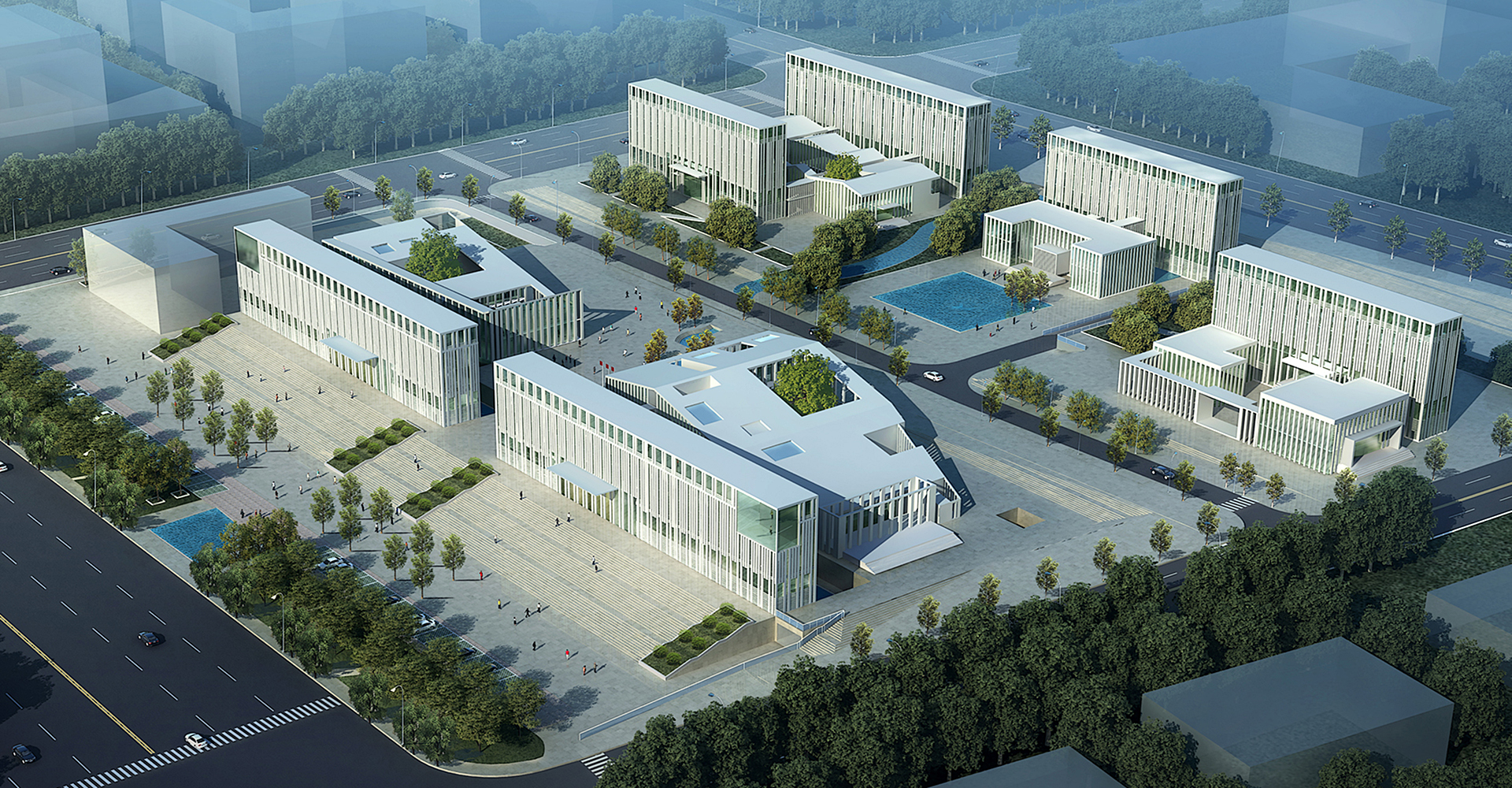
The overall layout adopts a rigorously symmetrical axial organization, with the primary buildings arranged in an orderly manner along the central axis. An entrance plaza, water features, and a hierarchically layered spatial sequence establish a clear and disciplined sense of ceremony, reinforcing the authority and recognizability of the complex. The architectural façades employ modular vertical shading elements as a unifying design language, forming a coherent and rhythmical visual system. Through the interplay of solid and void, these linear components shape a tall and composed architectural image while effectively controlling solar exposure, balancing symbolic expression with environmental performance.
In terms of landscape and spatial organization, the scheme introduces multi-layered strategies for natural integration. Daylit courtyards are embedded within the buildings, and green roofs are incorporated to achieve a vertical extension of the landscape, mitigating the sense of enclosure typically associated with large office buildings. Together with the entrance plaza and terraced public spaces, the complex not only supports efficient administrative operations but also provides the city with an open and accessible civic realm. The overall height and massing respond to the distant mountainous backdrop, ensuring visual and atmospheric harmony between the built environment and the surrounding natural landscape.

Copyright © 2025 West-line studio. All Rights Reserved|Privacy Policy|Prerms of Service