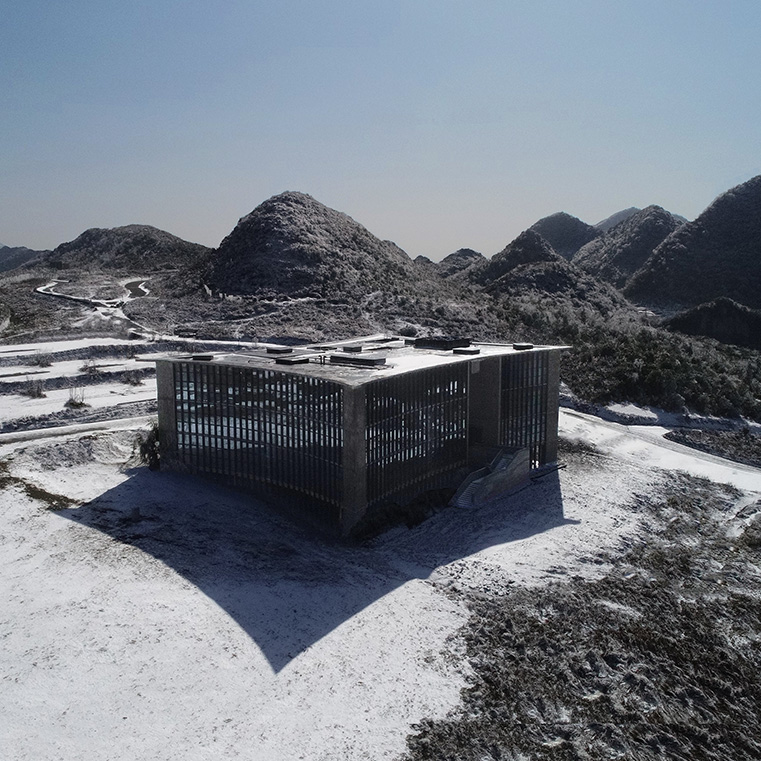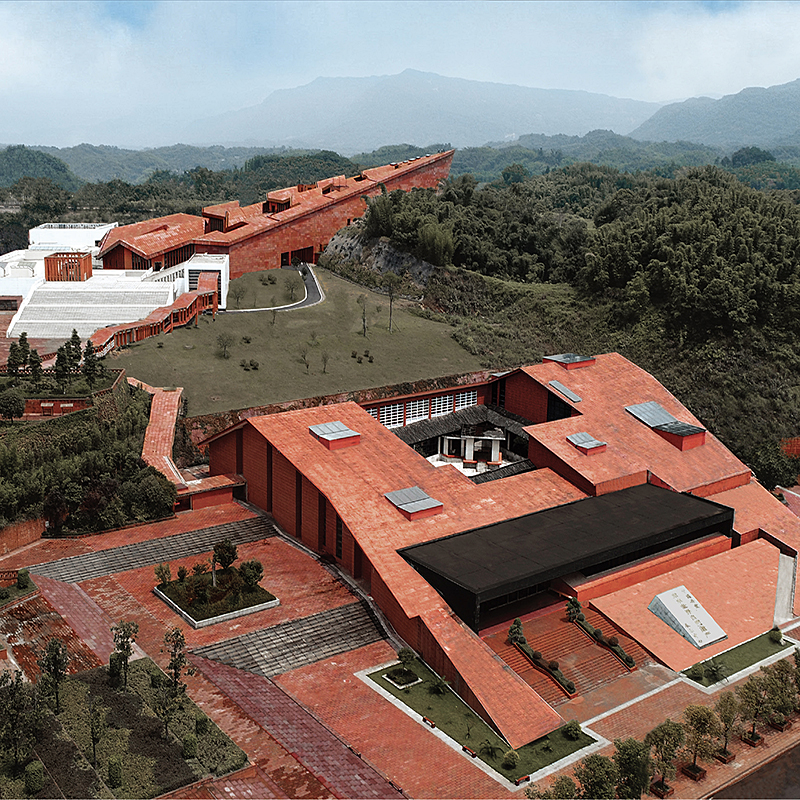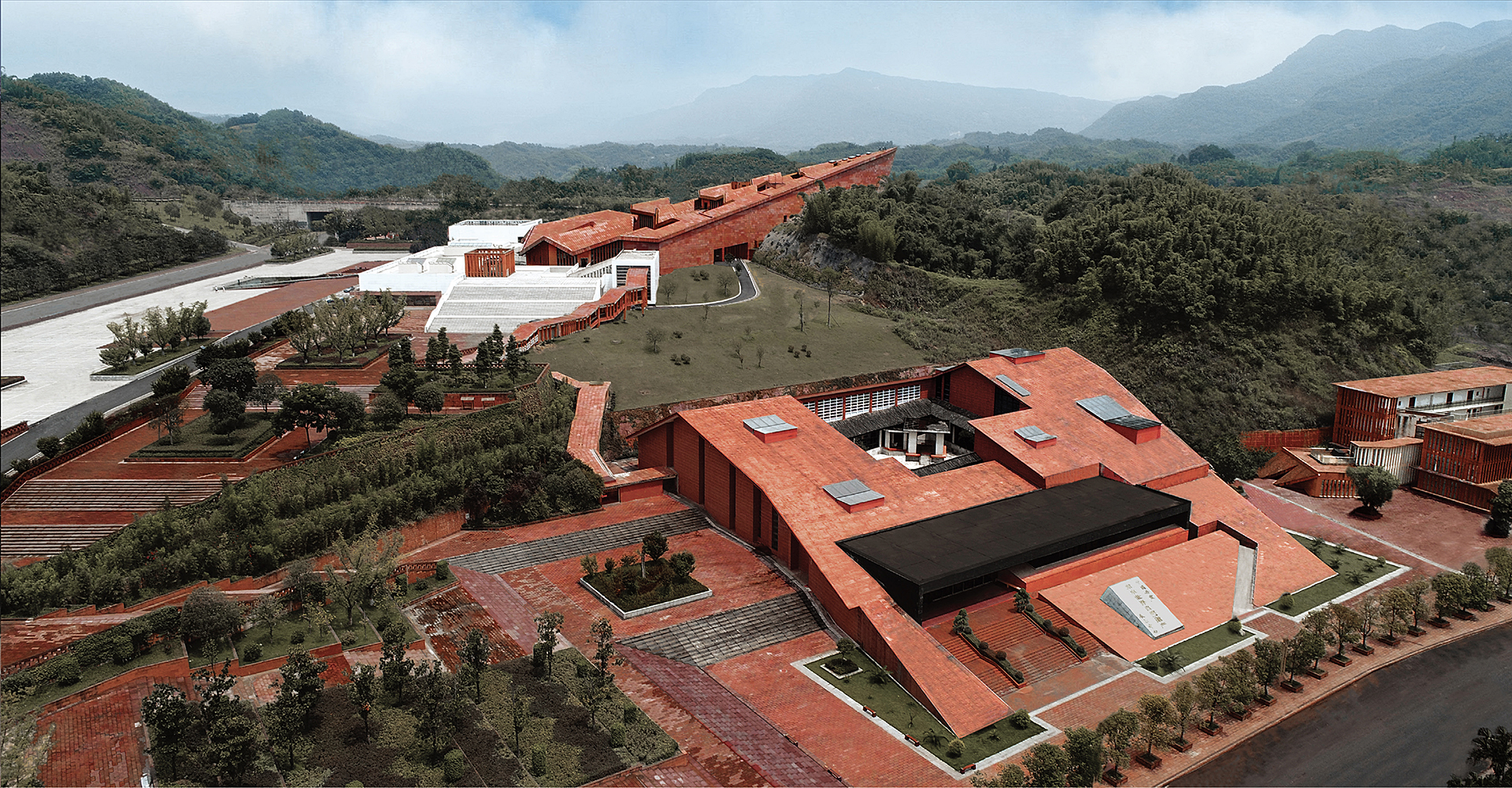
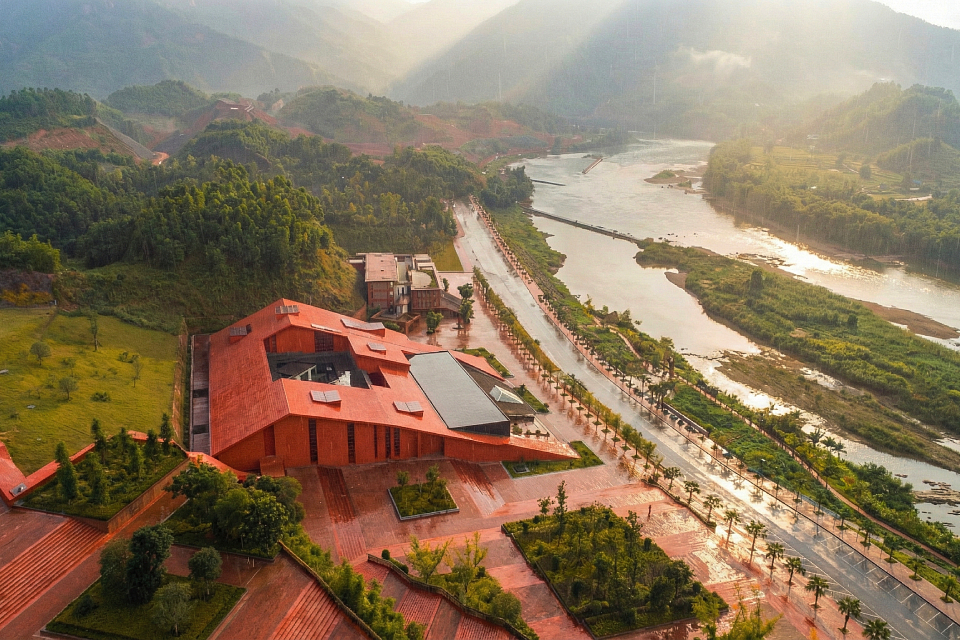

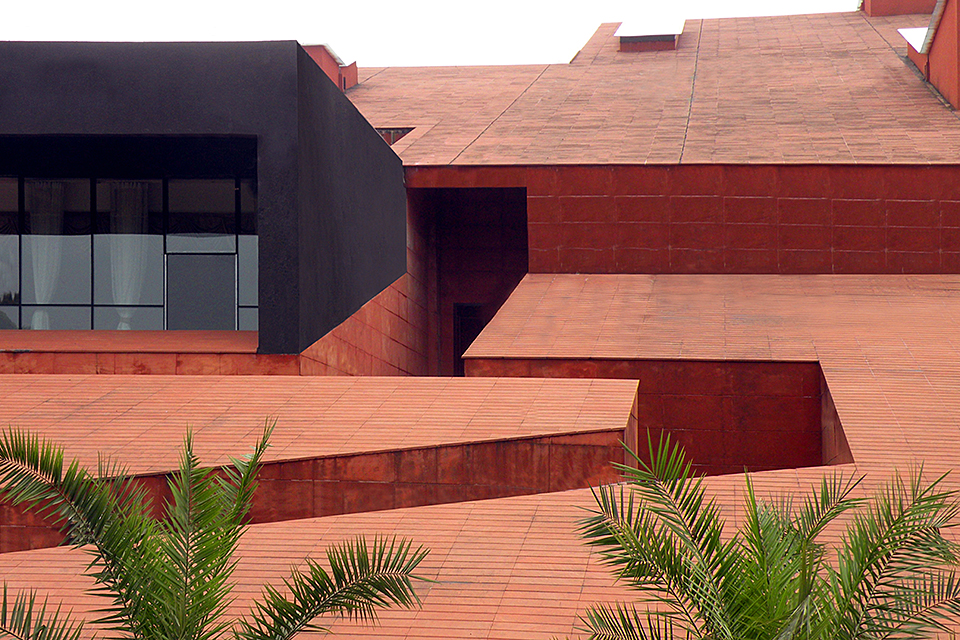
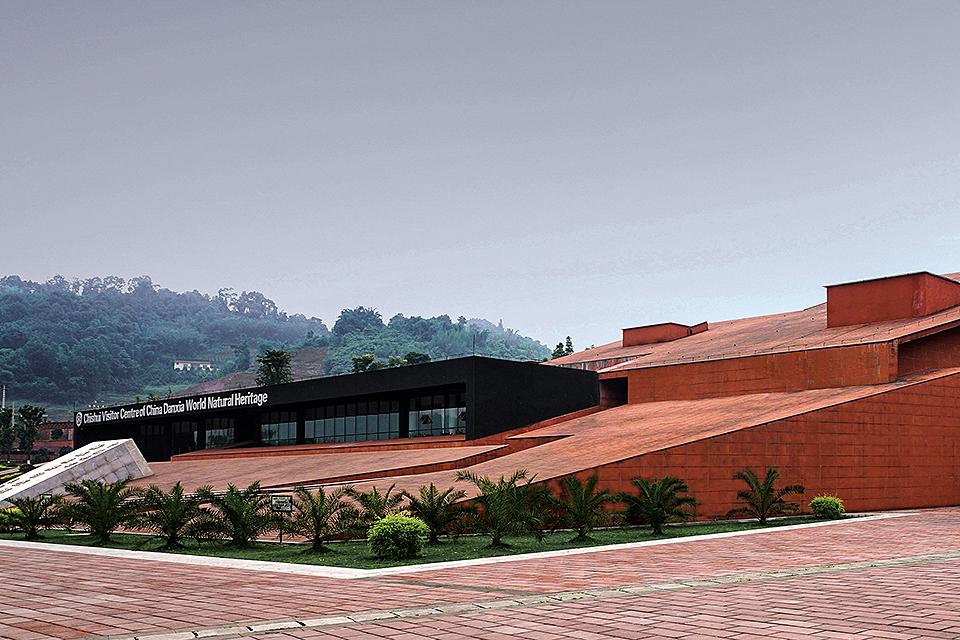
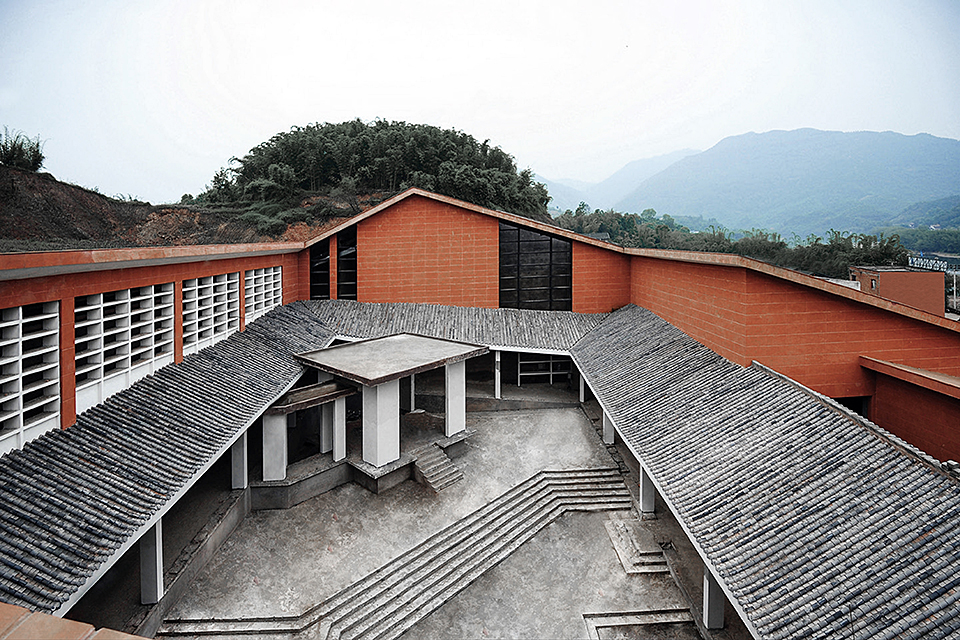
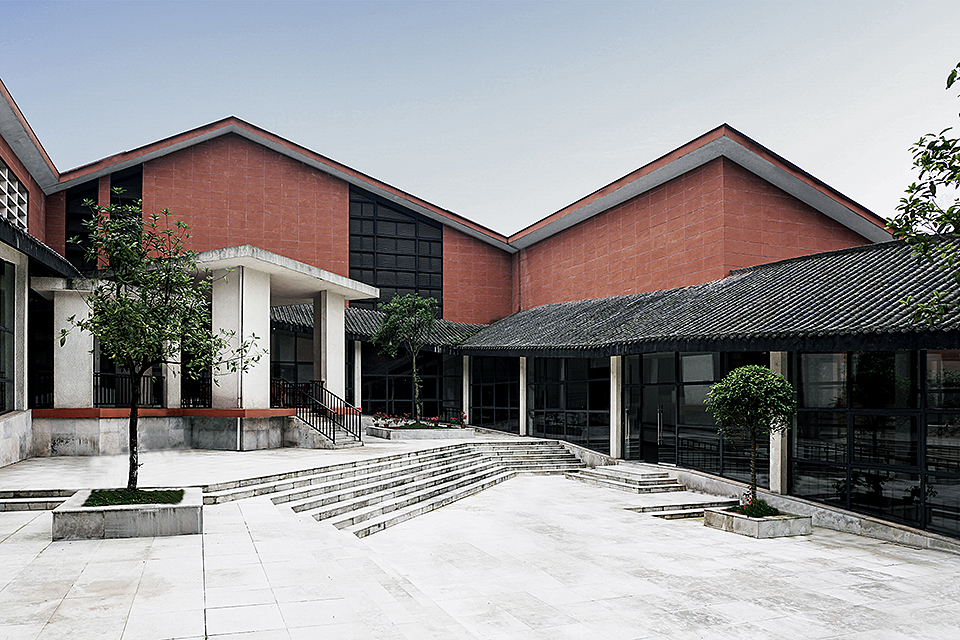

The Danxia Exhibition Center is located within the Danxia landform zone and forms a key component of the Danxia Central Building Complex. The site is set amid a typical Danxia peak-forest landscape, characterized by undulating terrain and folded rock strata, presenting a natural pattern of “layered plinths and conical spatial units.” Local villages have evolved in response to the terrain: settlements at higher elevations step back along the mountainside, while those at lower elevations align with the river. Organized around courtyard-based communal spaces, these villages embody a spatial logic of repeated units and incremental settlement growth. Their architectural features—undulating roofs, layered bases, and permeable façades—serve as important prototypes for the design.
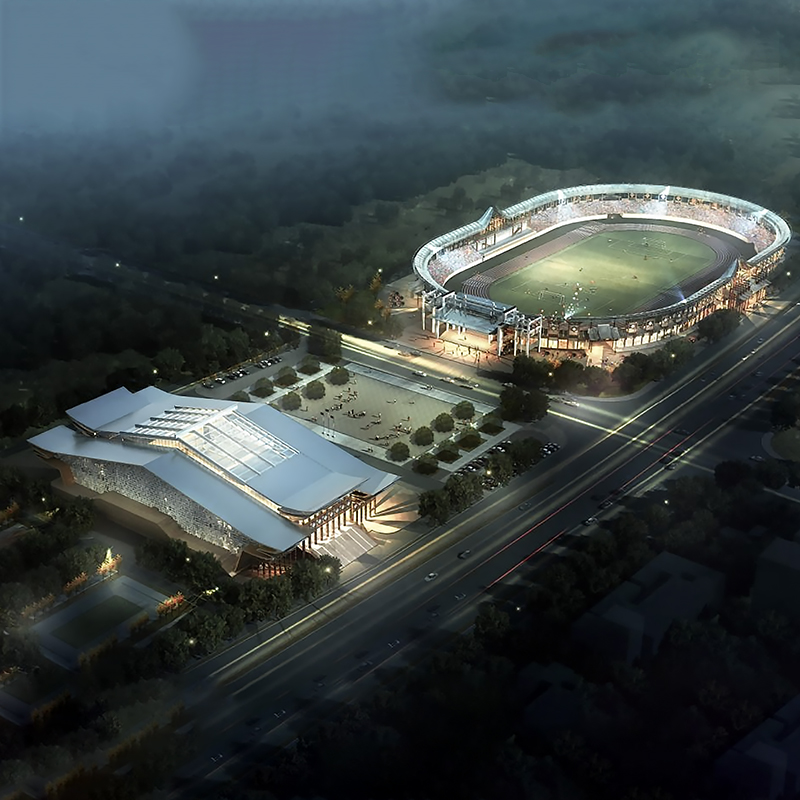
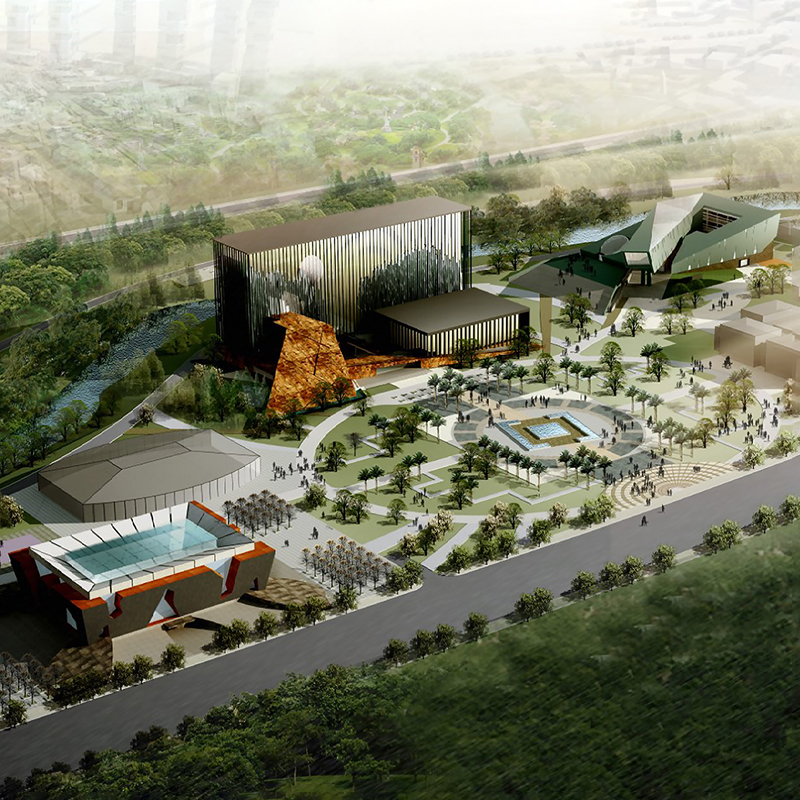
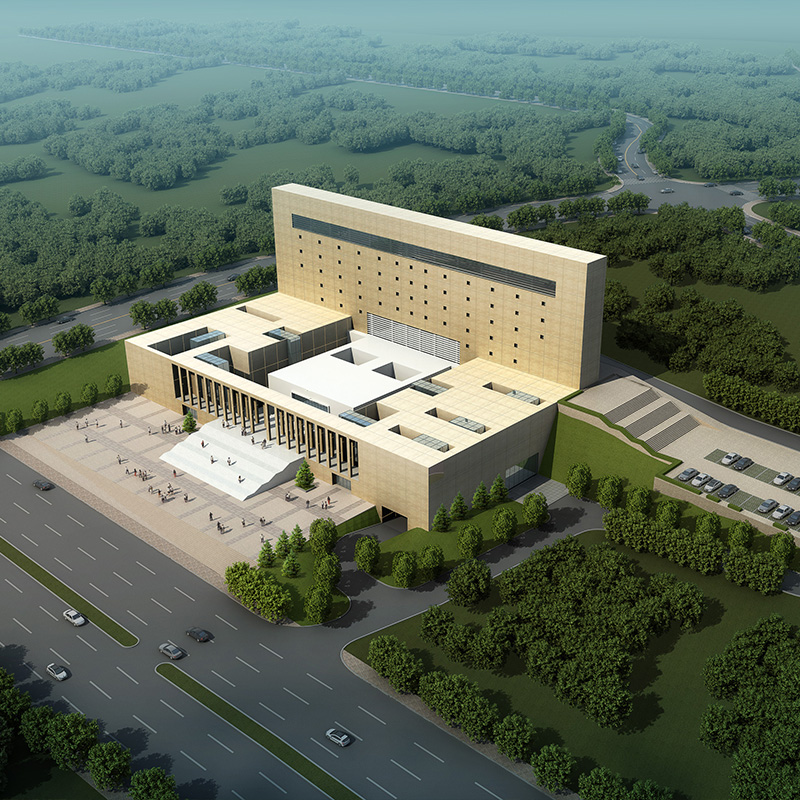
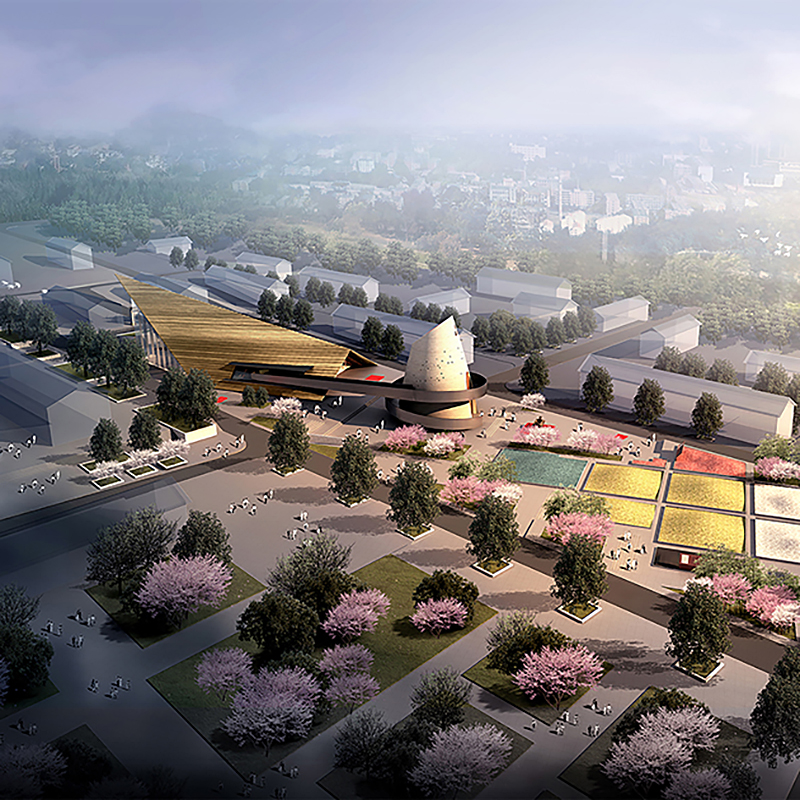
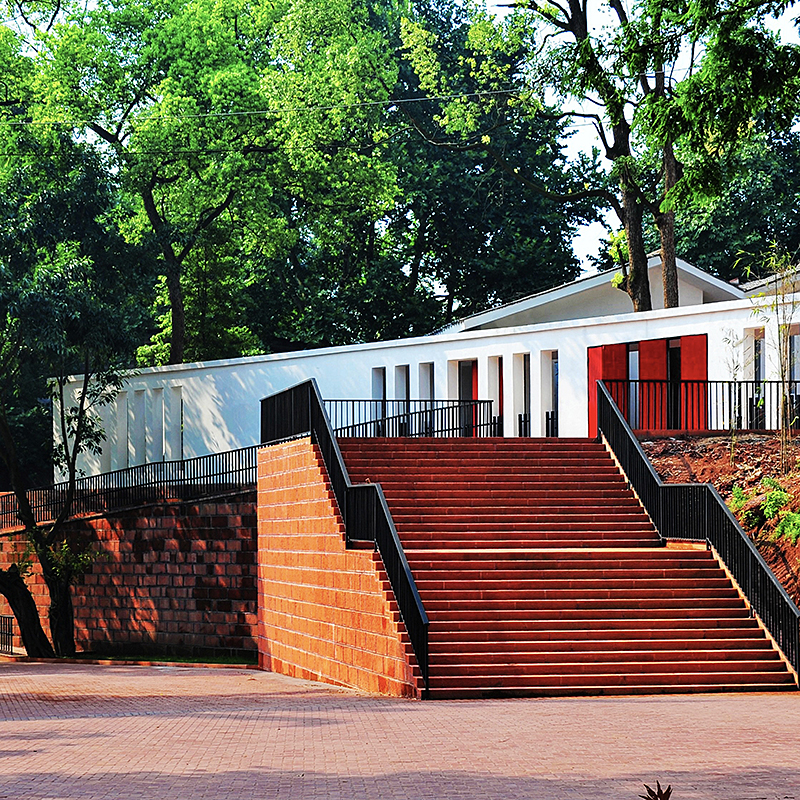
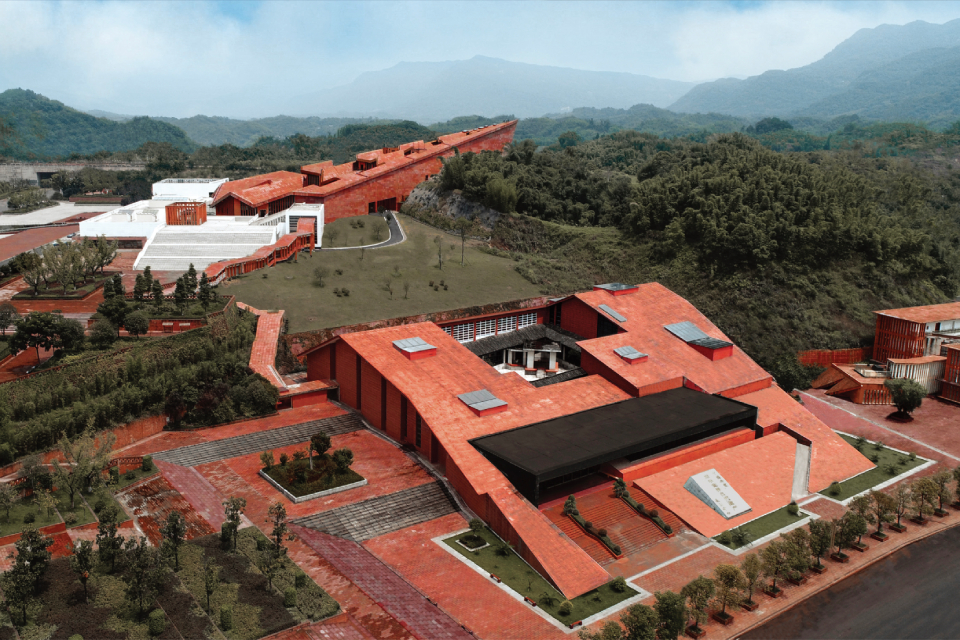
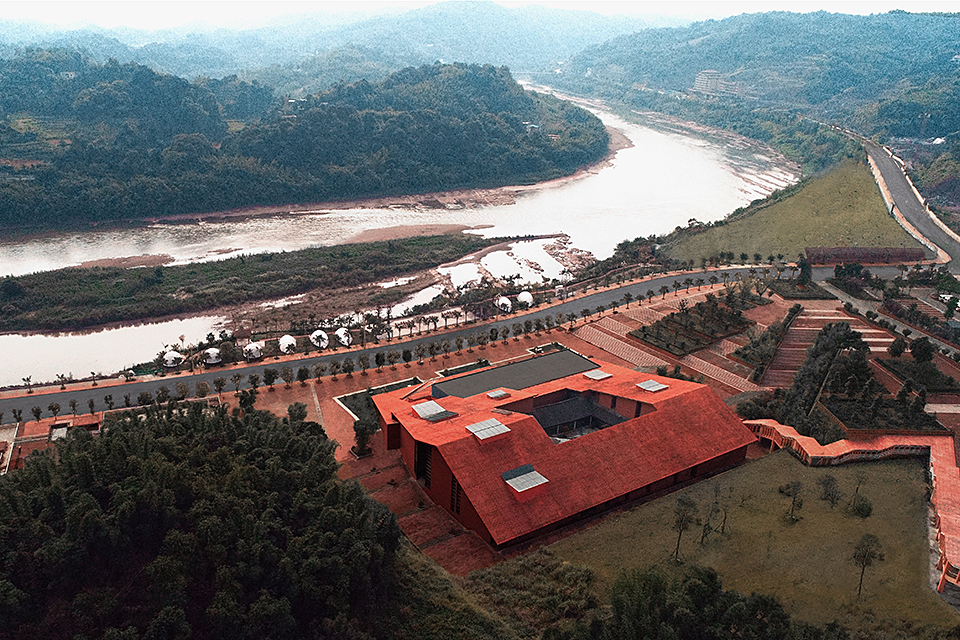
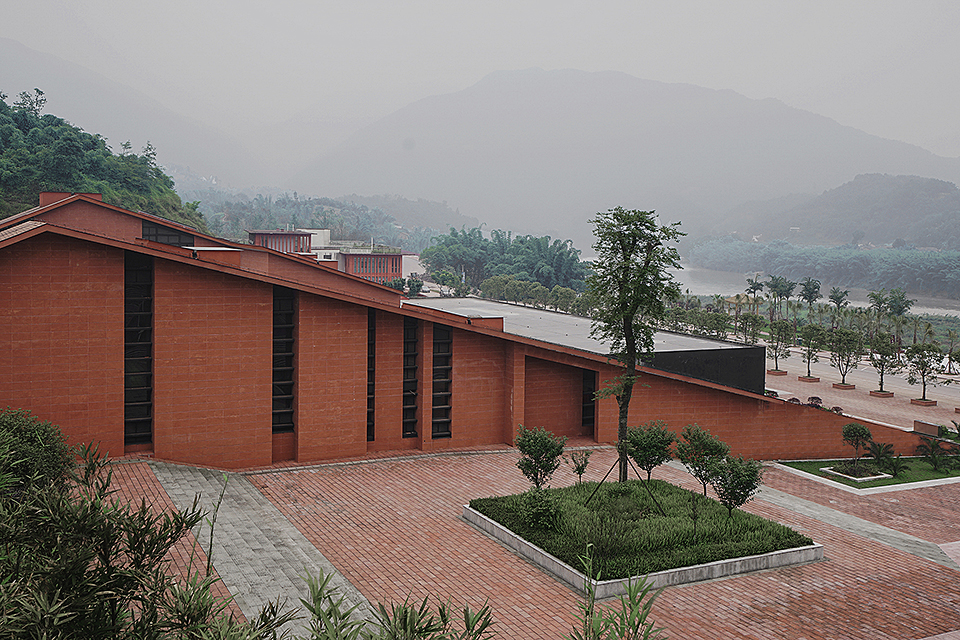
Taking the landform as its primary reference, the design strategy of the Danxia Center adopts a peak-forest-inspired system of “plinth plus unit volumes,” allowing the architecture to merge seamlessly with its surroundings. The overall layout follows the topography: visitor services and a ceremonial entrance plaza are placed at higher elevations along the main road, while the exhibition center and outdoor display areas are arranged along the river below. These elements are connected through terraced plaza plinths, forming a coherent spatial system. The riverfront exhibition center and the mountainside visitor facilities establish a layered landscape relationship, responding to one another across distance and elevation.
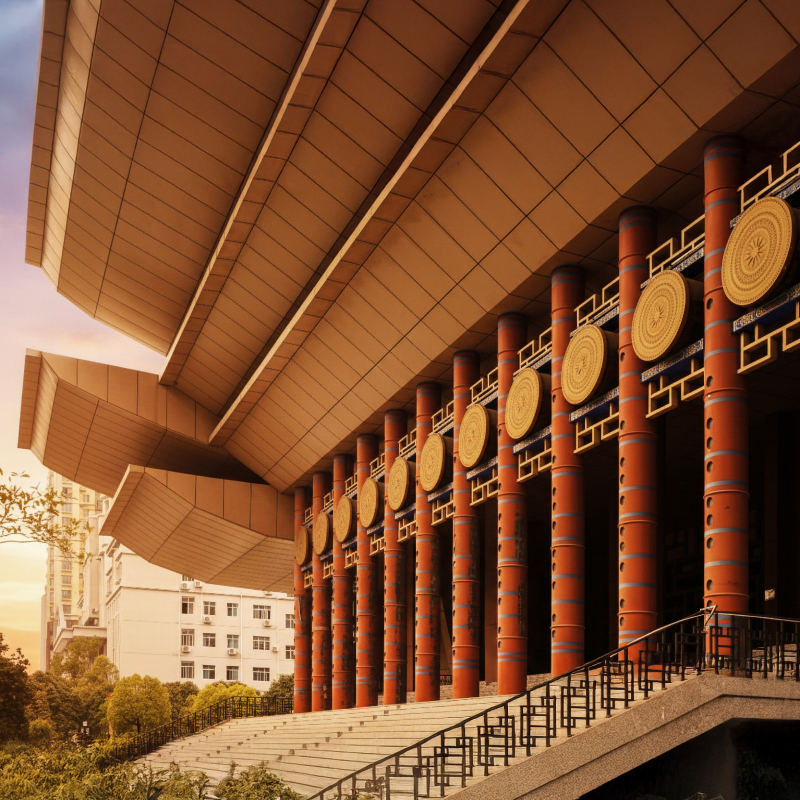
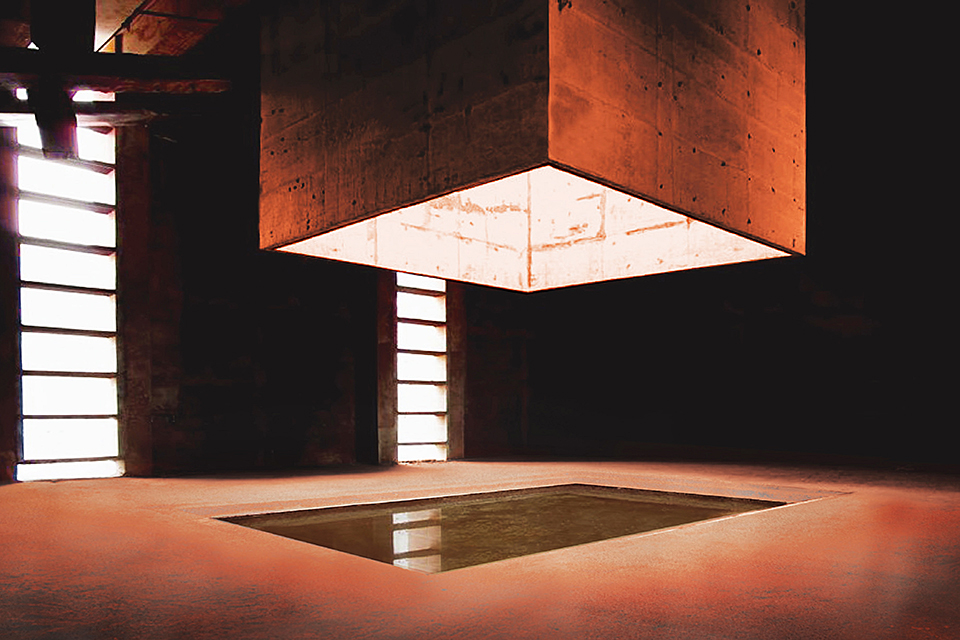
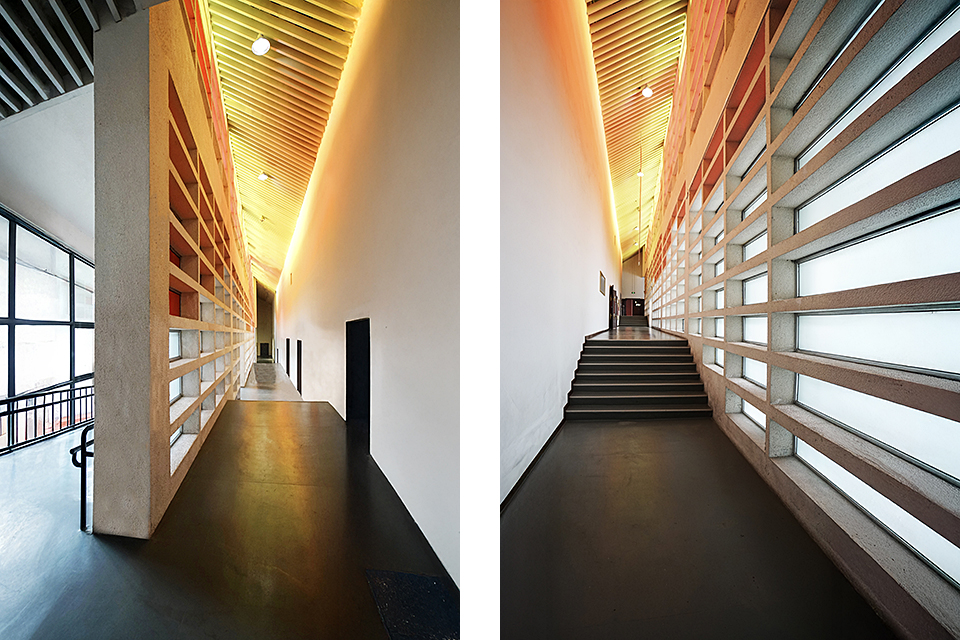
The exhibition center continues the local minority spatial tradition in which sacred and secular functions coexist. The riverside exhibition spaces adopt a gesture of “descending toward the water,” complementing the “ascending toward the mountain” ceremonial center, together shaping a spatial structure that balances ritual character, public accessibility, and artistic expression. Multiple courtyards integrated with carefully controlled natural light work in concert with the exhibits to create an atmosphere reminiscent of the glowing red cliffs of the Danxia landscape. Red Danxia stone is used as the primary building material, giving the architecture the appearance of emerging from the land itself and establishing a spiritual landscape where mountains, water, and architecture are fully integrated.

Copyright © 2025 West-line studio. All Rights Reserved|Privacy Policy|Prerms of Service