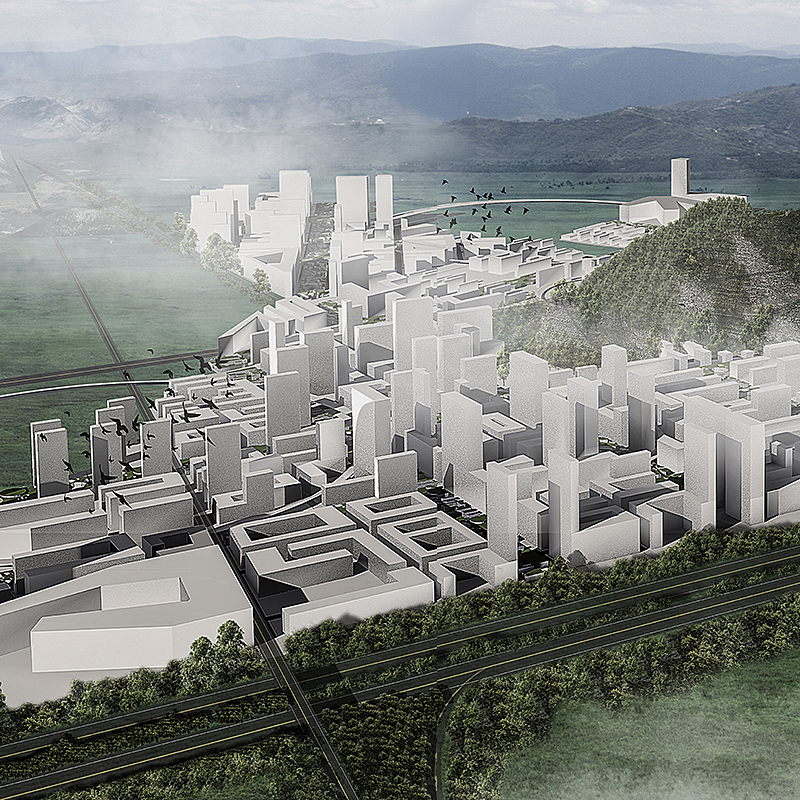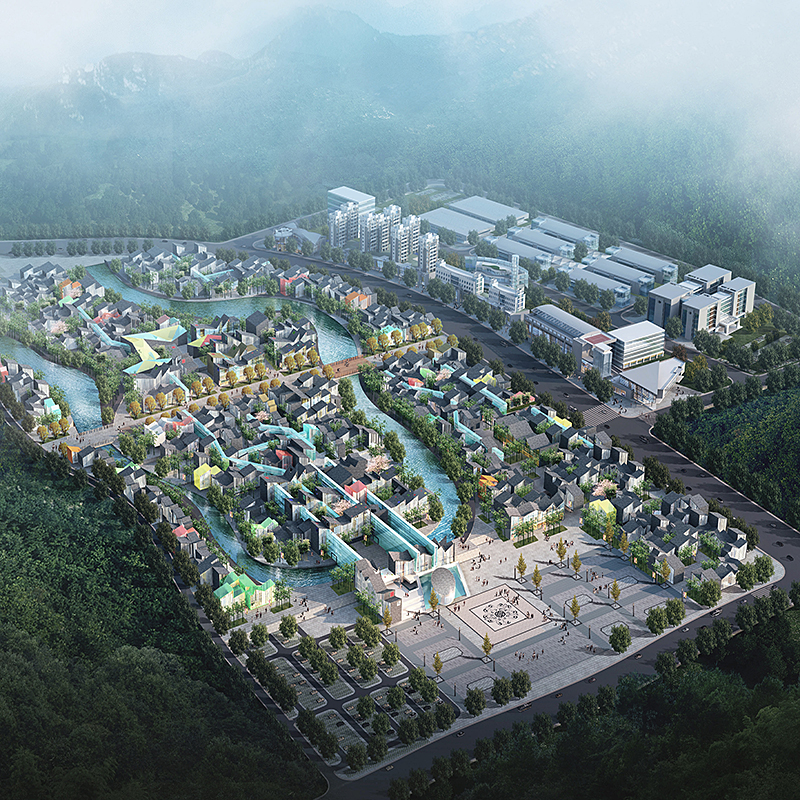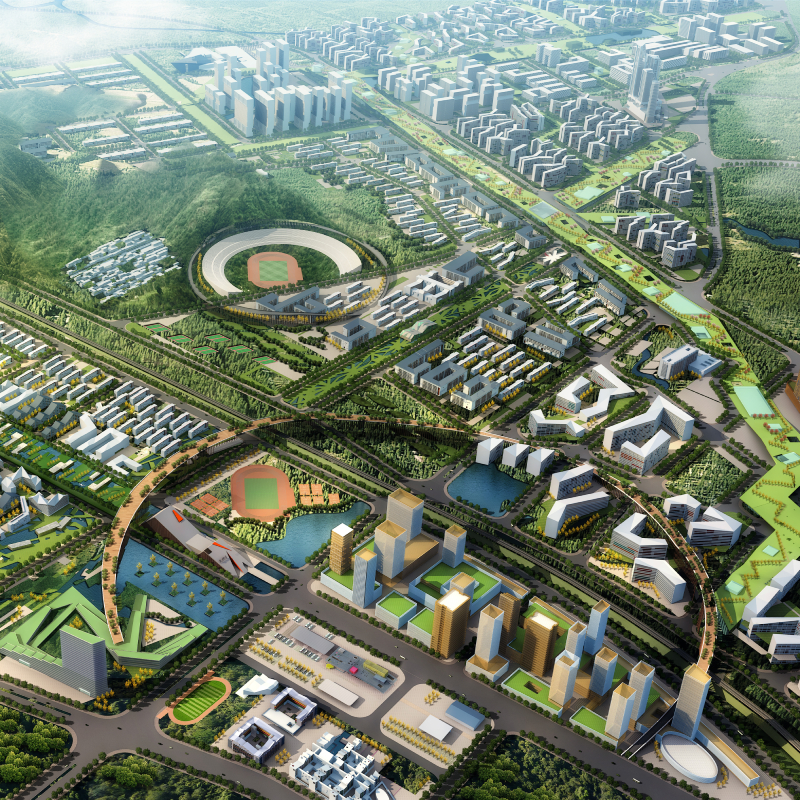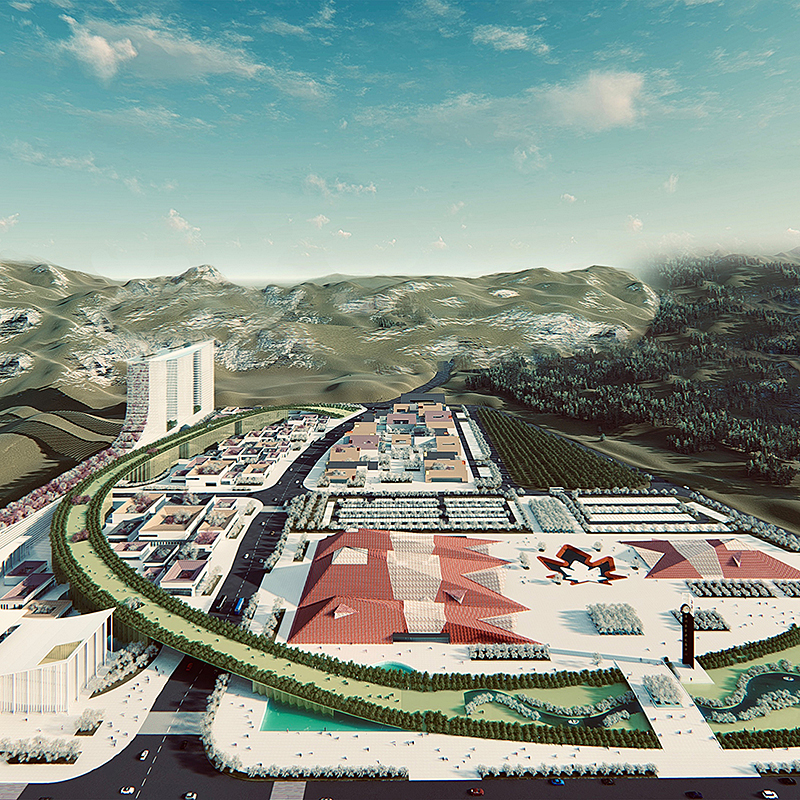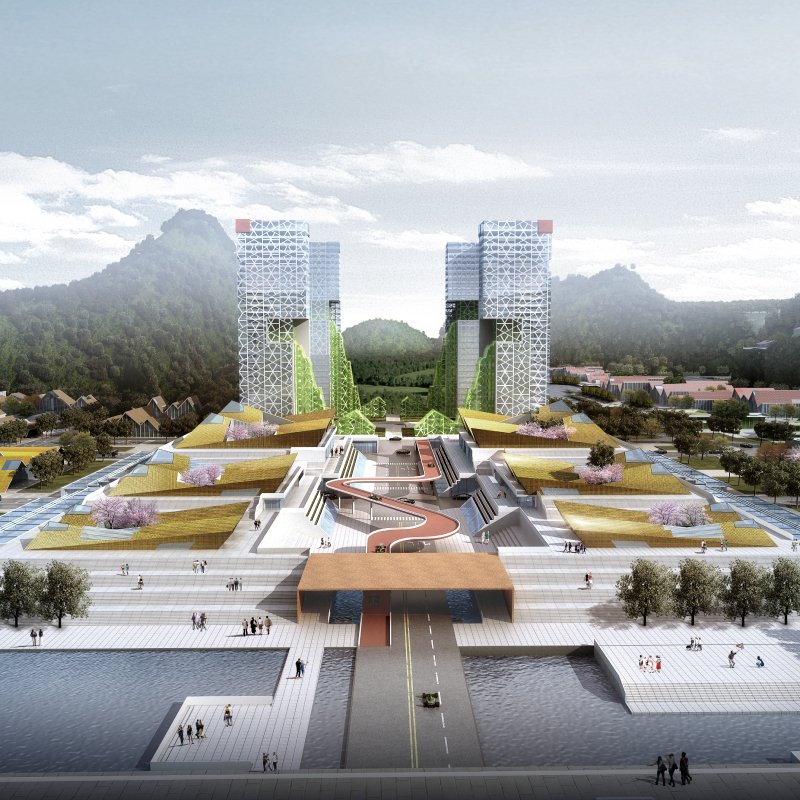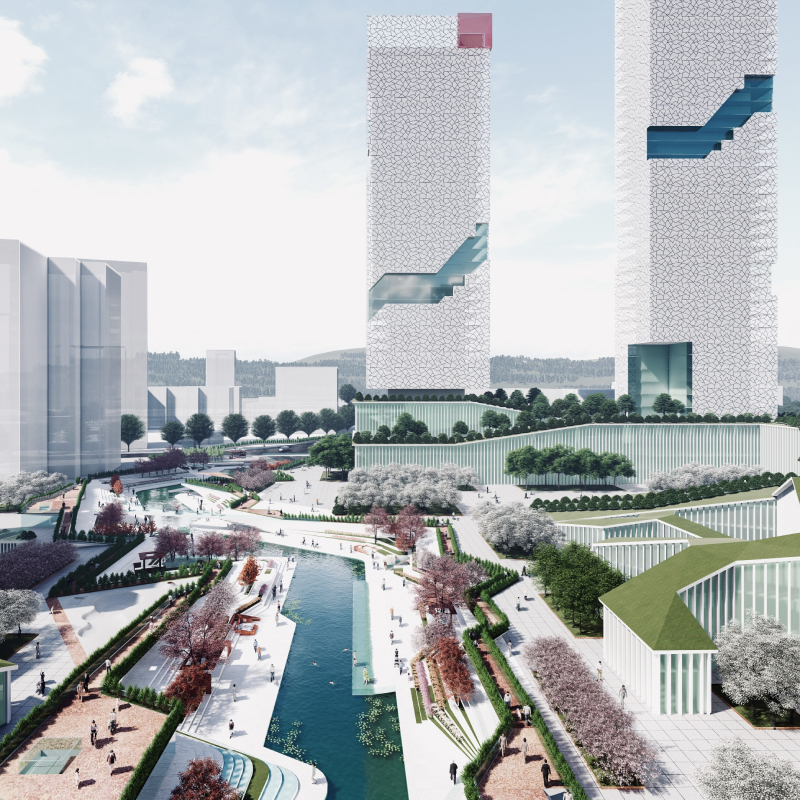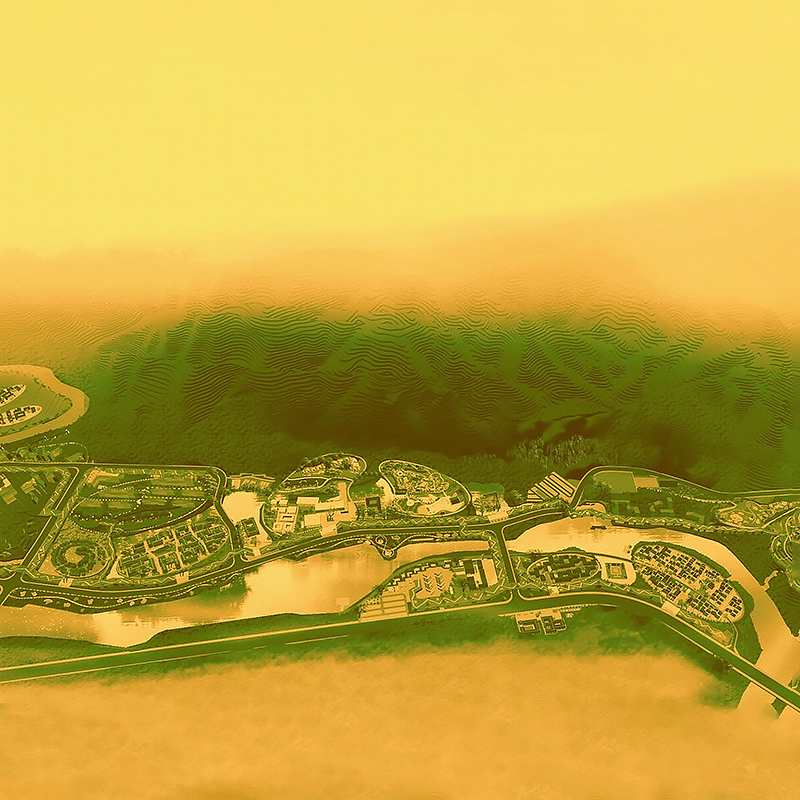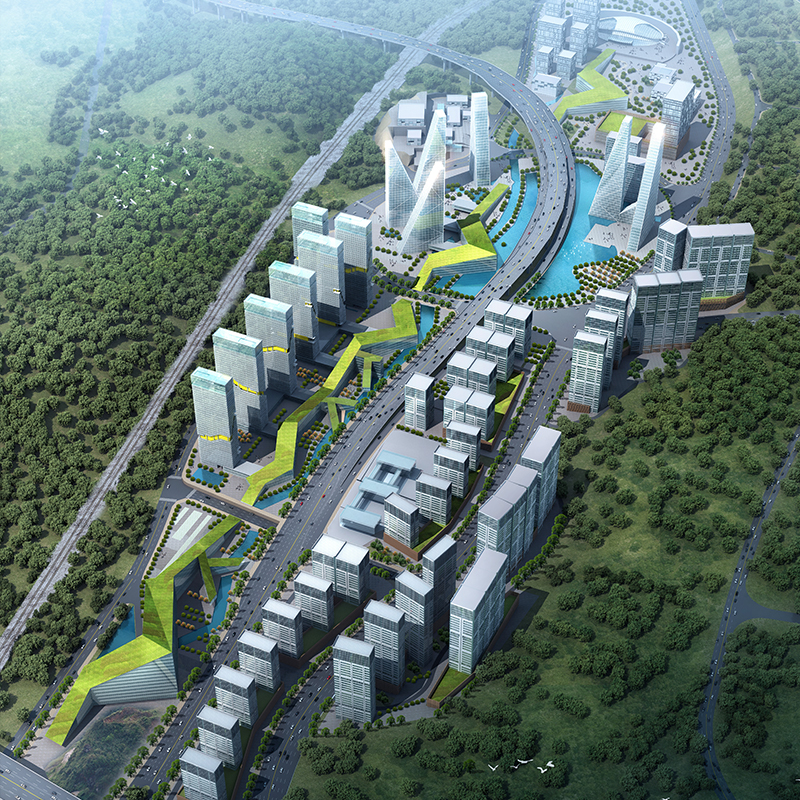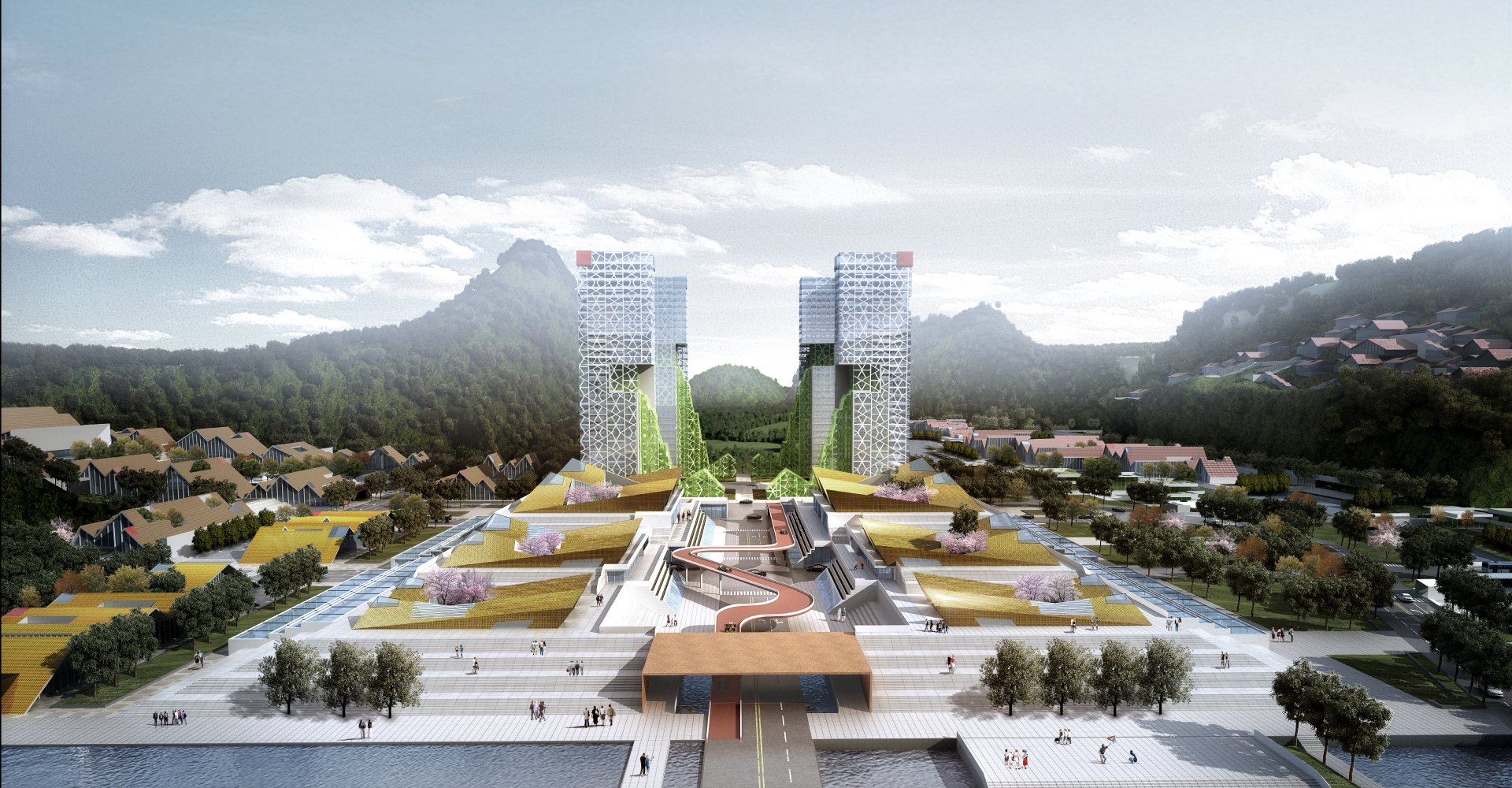
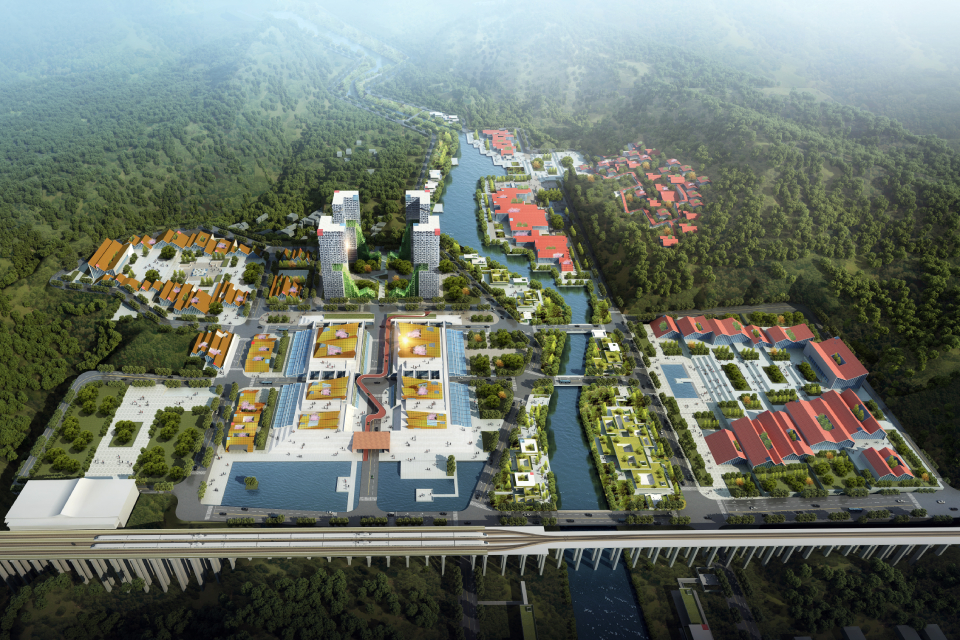
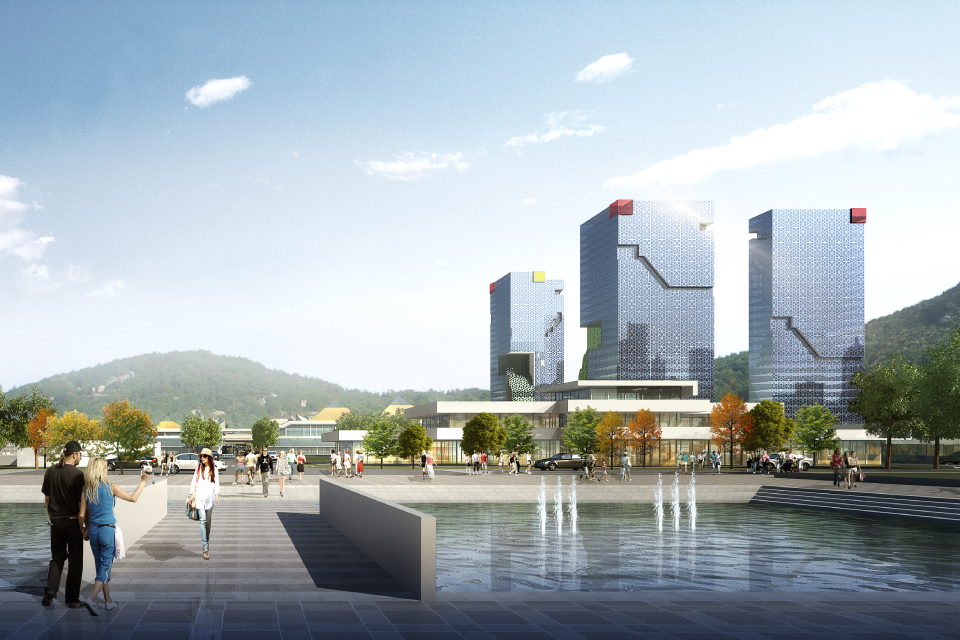
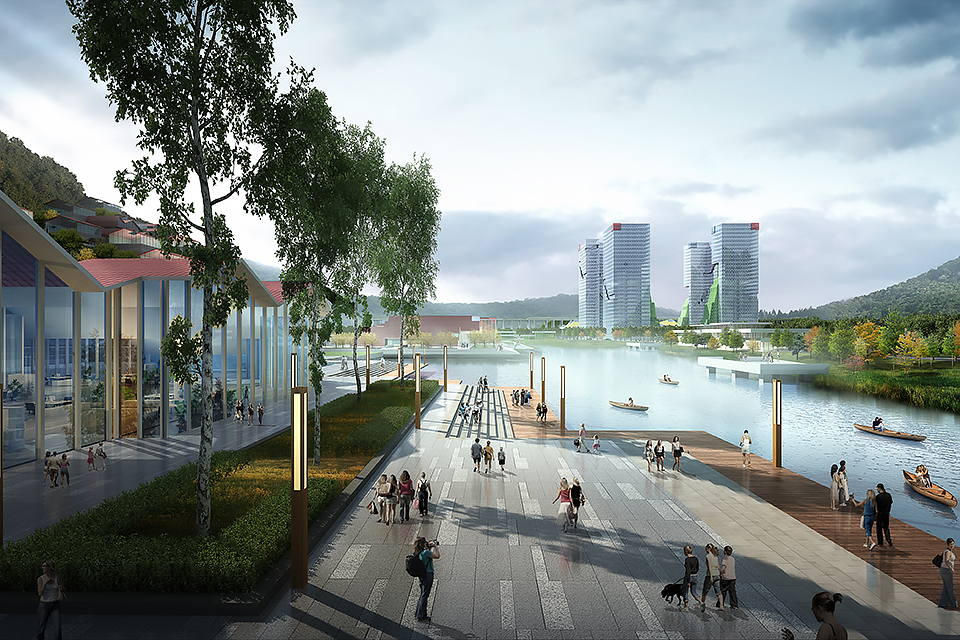
This project is set within a typical peak-cluster valley landscape and aims to create a racing-themed tourism town with international influence. The design is centered on the integration of two core strategies: “repetitive isomorphic units” and a “monumental podium system,” establishing a clear and dynamic spatial order in response to the natural terrain.
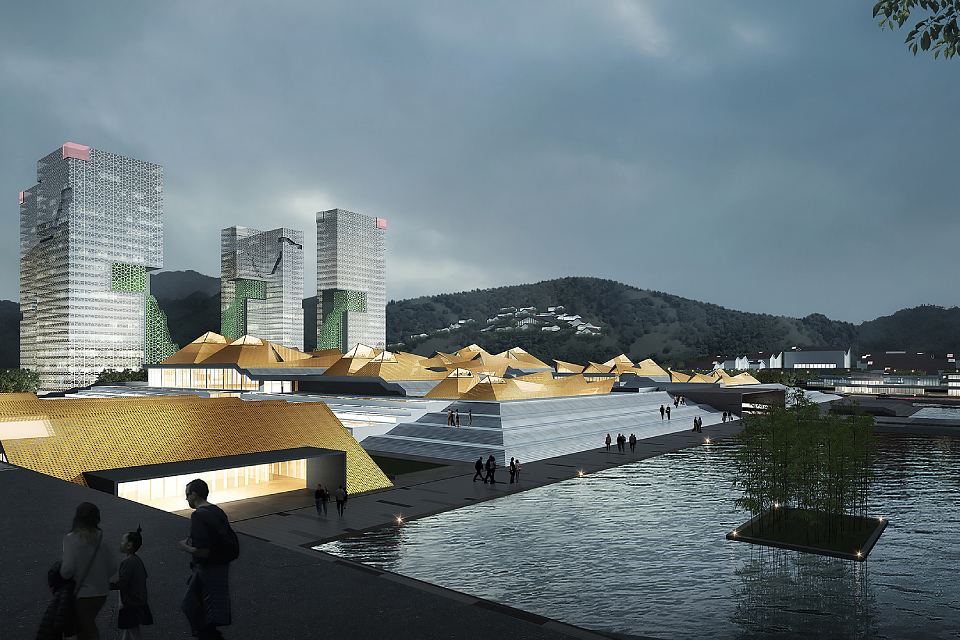
In terms of architectural form, the scheme reinterprets traditional elements of Chinese architecture—such as the Xumizuo podium—through a contemporary lens to construct a highly legible and powerful base system. The podium defines clear spatial boundaries, strengthens the anchoring relationship between architecture and the ground, and establishes a distinct hierarchy between “upper” and “lower” spaces. This organization generates ceremonial public and exhibition spaces of a grand and dignified character, endowing the overall setting with a sense of stability and symbolic presence.
At the master-planning scale, the project employs a strategy of repetitive isomorphic units to form the spatial framework. Through serrated plan topologies and the aggregation of courtyard-based units, the building clusters grow organically along the terrain and waterfront green corridors. Both the agricultural development complex and the boutique hotel clusters adopt layered and folded isomorphic roofs combined with courtyards at multiple scales, evoking the rhythm of overlapping mountain ranges and achieving a contemporary translation of local topography and vernacular dwelling traditions.
The interaction between the ceremonial quality of the podium system and the dynamic structure of the isomorphic units creates a spatial configuration that balances overall coherence with programmatic diversity, allowing the racing town to establish a distinctive sense of place within its mountainous landscape.

Copyright © 2025 West-line studio. All Rights Reserved|Privacy Policy|Prerms of Service