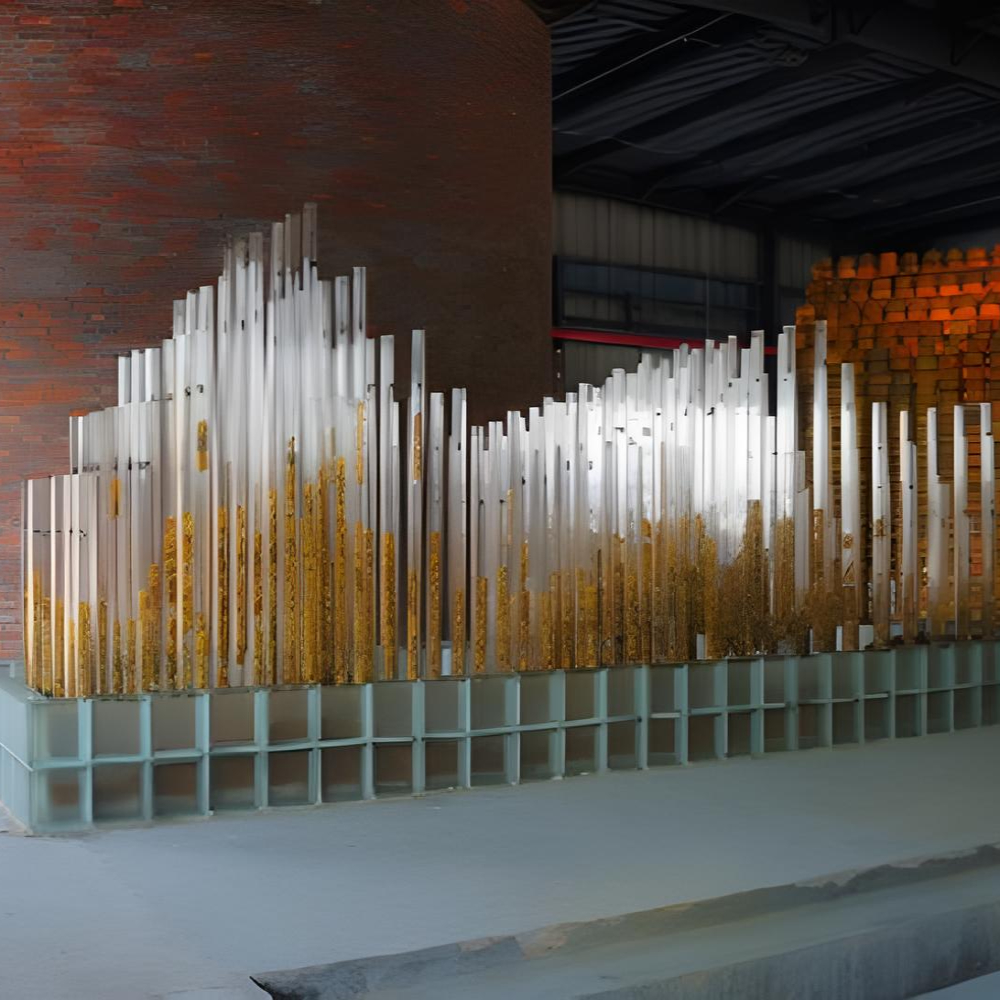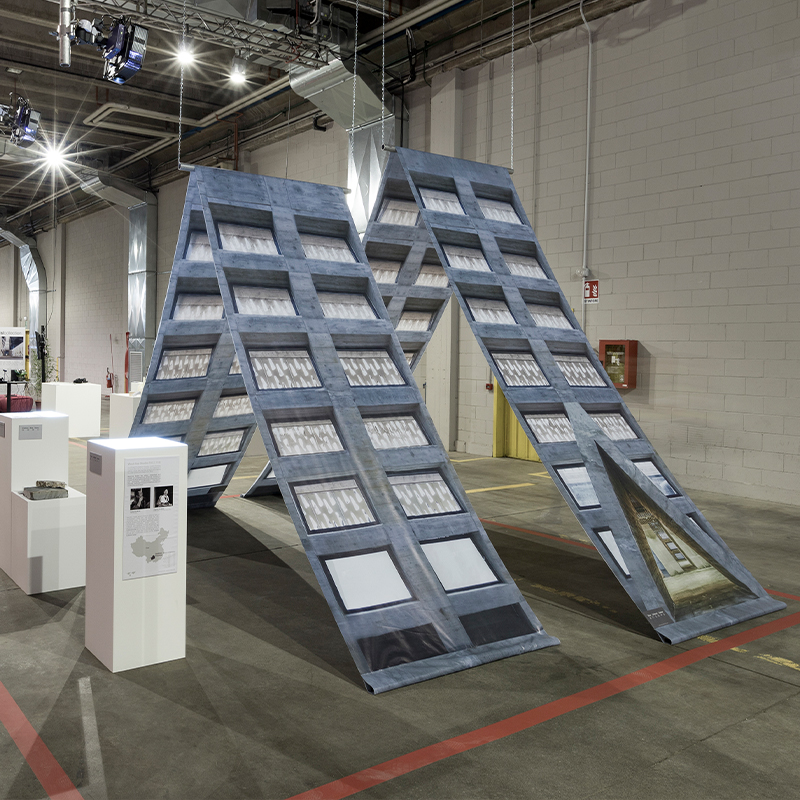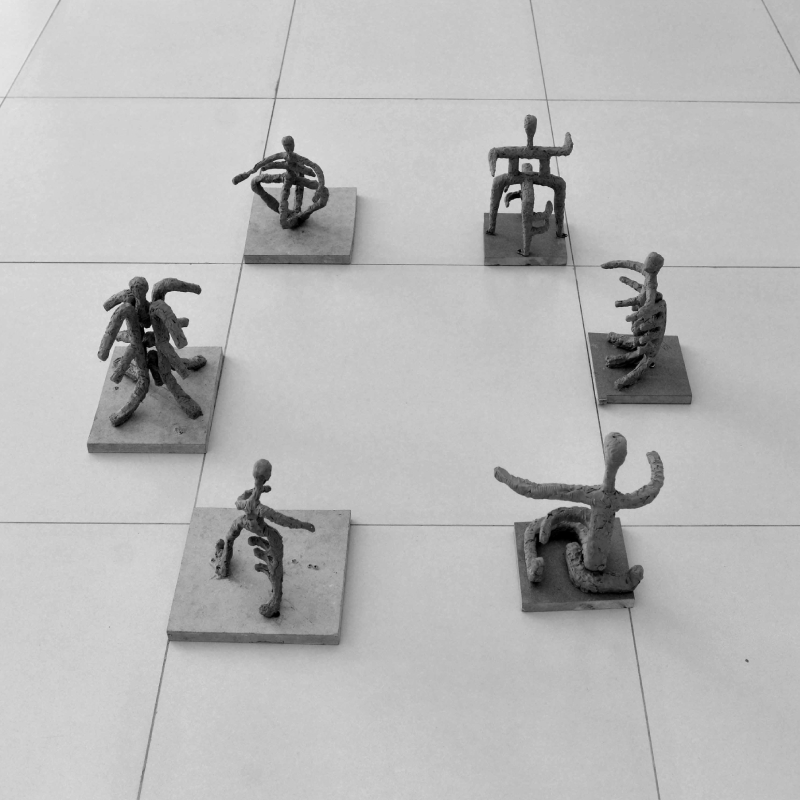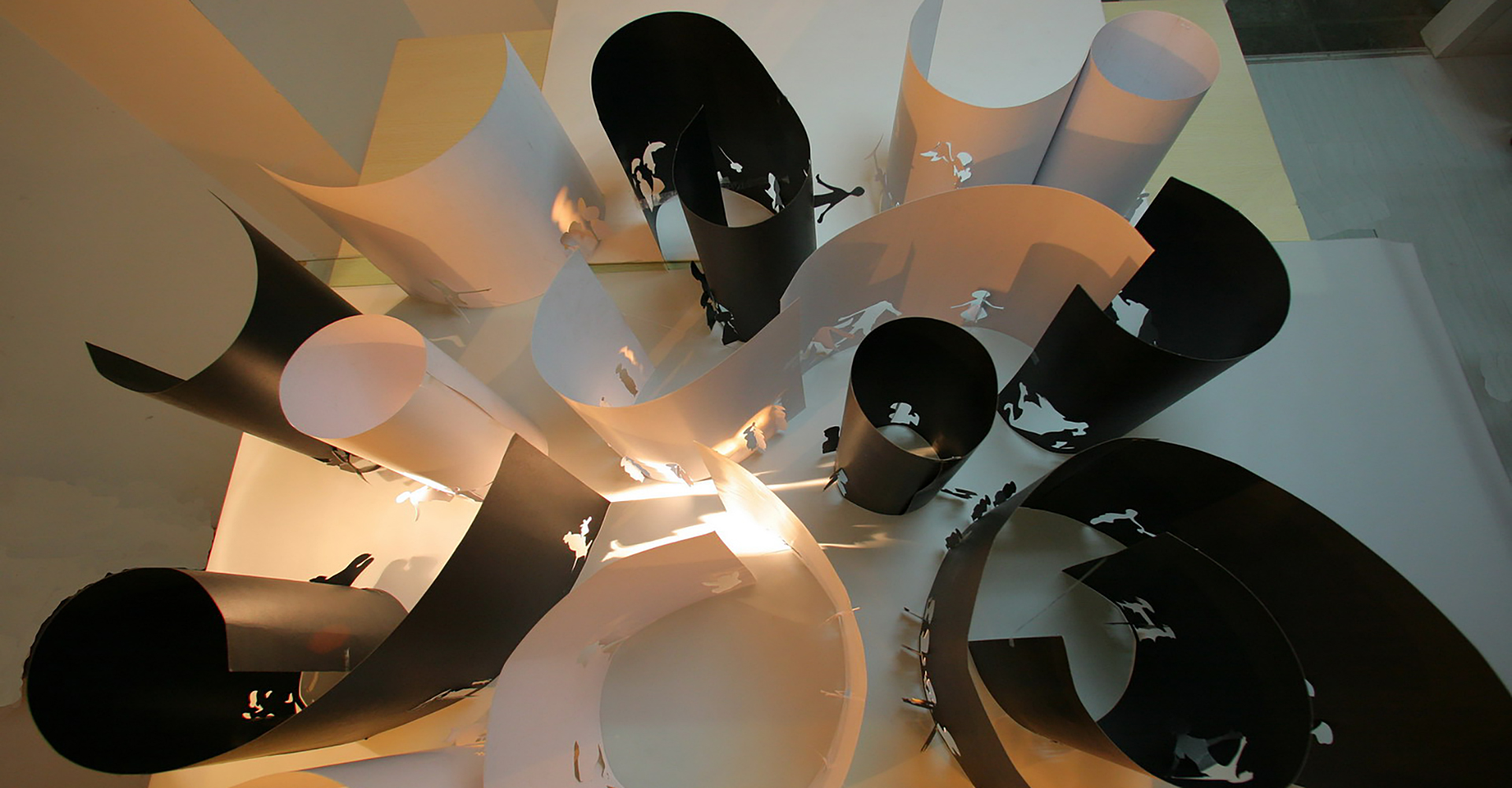

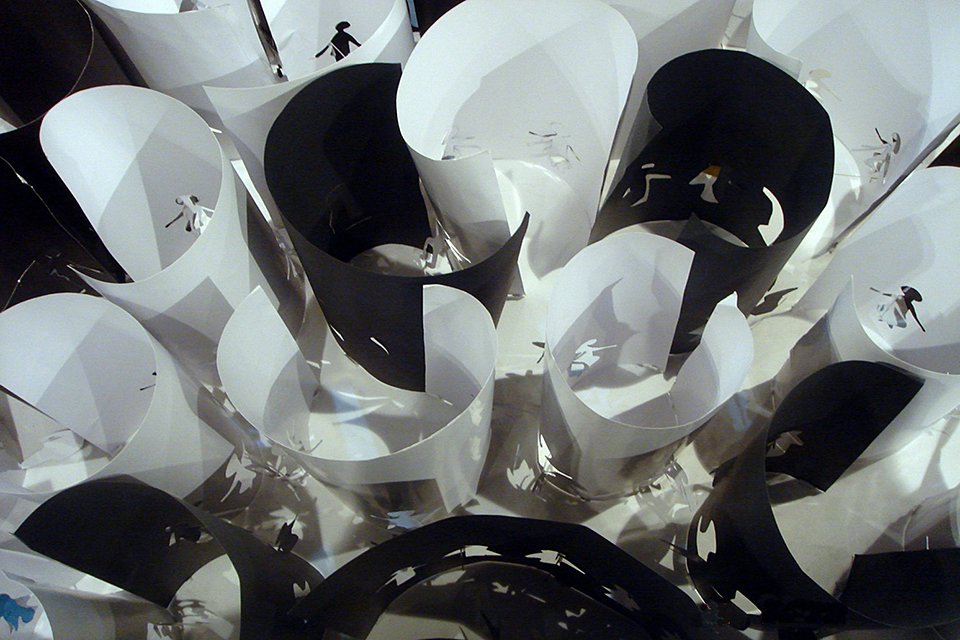
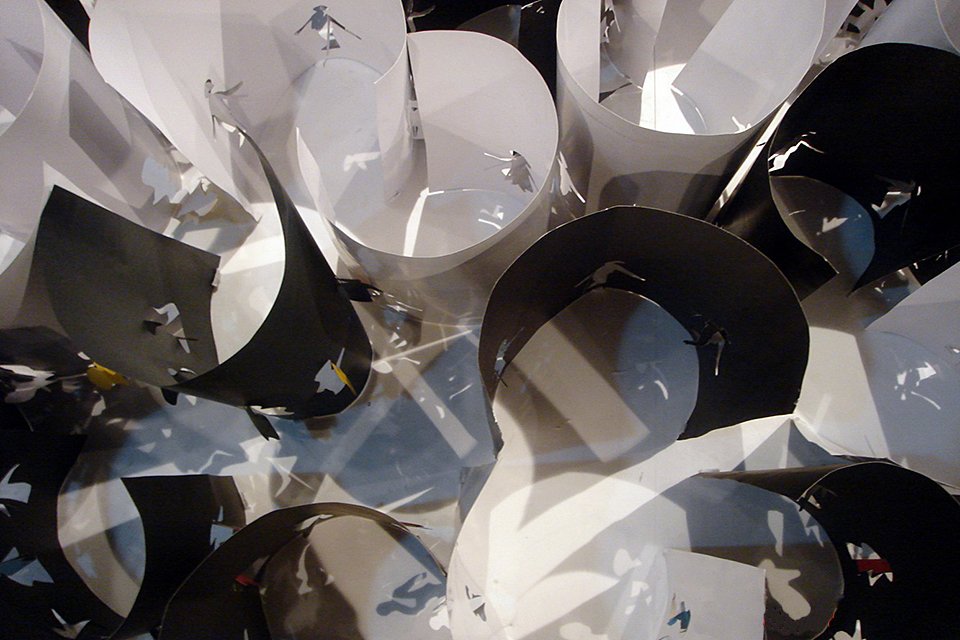
In traditional society, Cloth symbolizes the common people, the most fundamental force of social structure. The design concept introduces two systems: the native system and the dyed system. The native system represents an authentic, localized way of life (white), while the dyed system embodies lifestyles shaped by globalization and fashion (black). These two systems coexist in contemporary China, yet remain in an unequal state. Systems are defined by boundaries, which mark their differences; however, the space “in between” them reveals a fluid, permeable quality, like water—an unstoppable force within the tides of globalization. The Cloth community forms the主体 of this “in-between,” continuously opening or closing system boundaries through communication, media, and fashion trends. The door thus becomes a metaphor for their intervention, representing either intrusion or rejection.
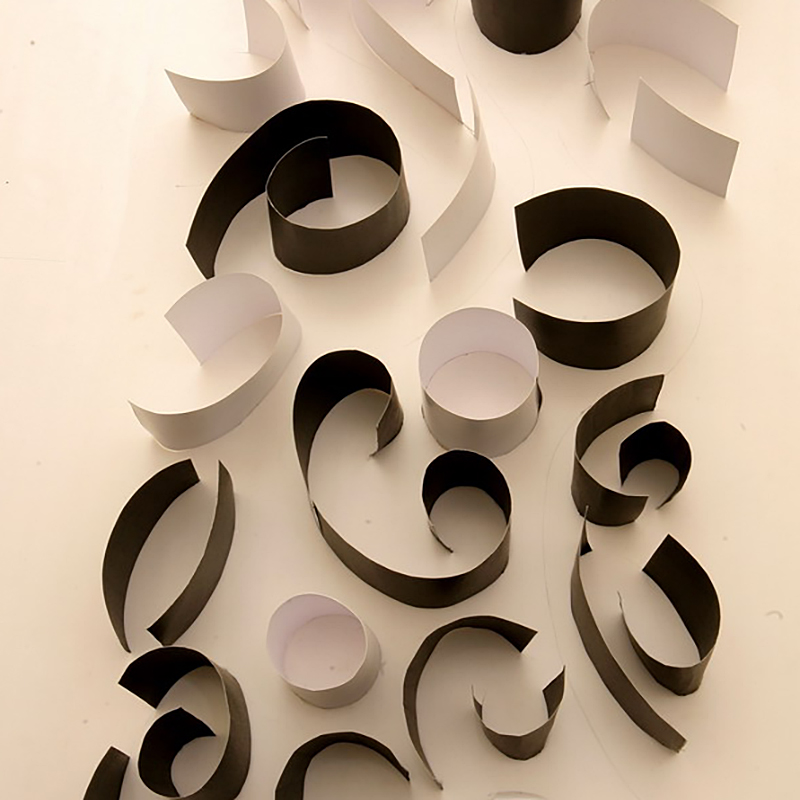
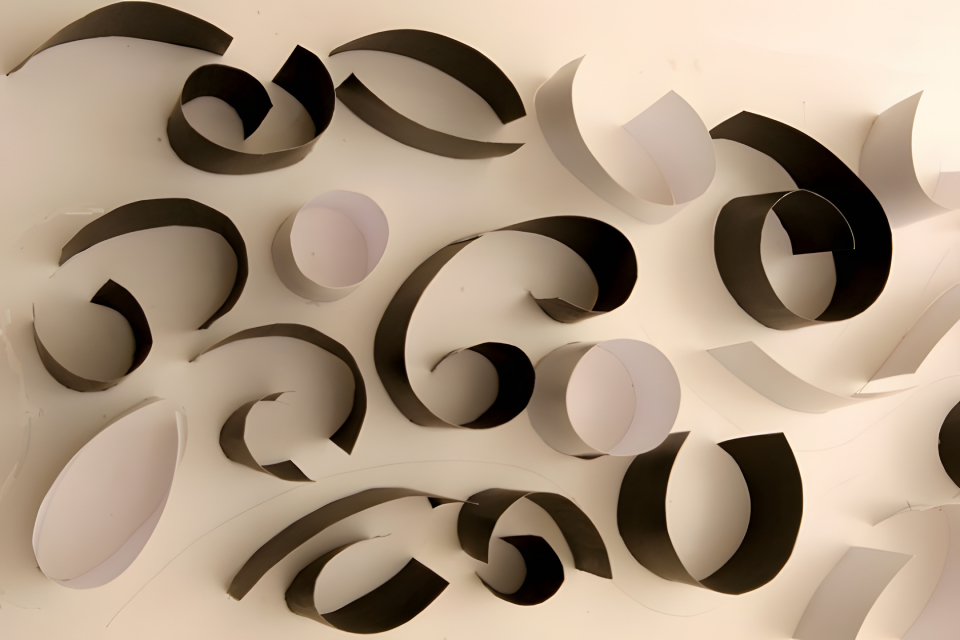
On the spatial level, the design materializes into two types of environments: fluid spaces and retentive spaces. The former possesses qualities of diffusion and penetration, while the latter introduces resistance, naturally generating a tension between motion and stillness. Through the action of “rolling,” the spaces form enclosed or semi-enclosed states, implying centripetal and exclusive aspects of social organization. The whole is constructed from around 300 A3-sized fragments, in a black-to-white ratio of roughly 4:6. Arranged in proximity, in linear sequences, in clusters, or as isolated units, these fragments produce diverse boundary configurations that articulate the complex interactions between systems and social structures.

Copyright © 2025 West-line studio. All Rights Reserved|Privacy Policy|Prerms of Service