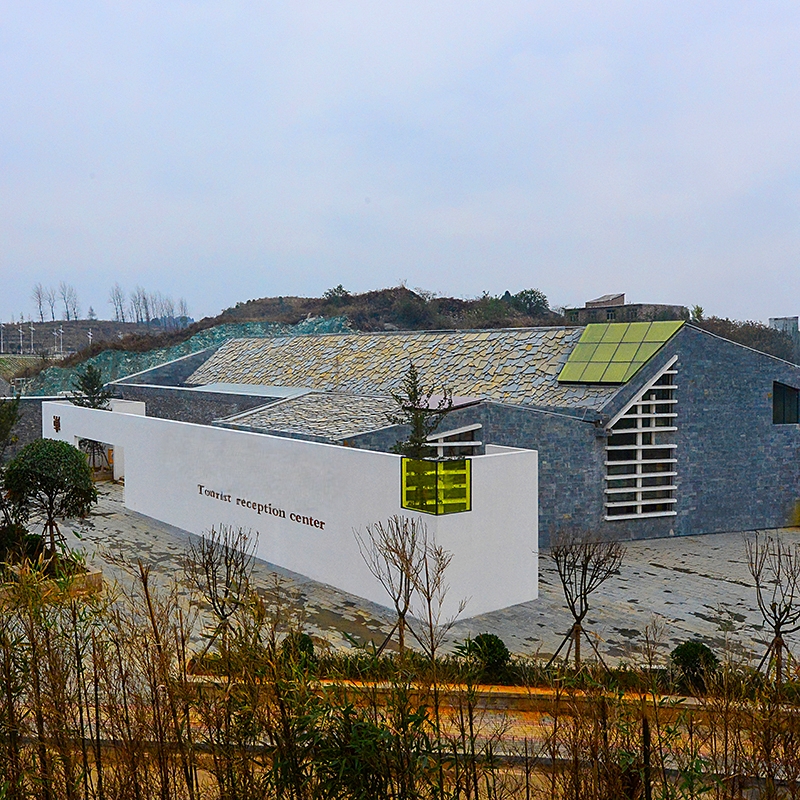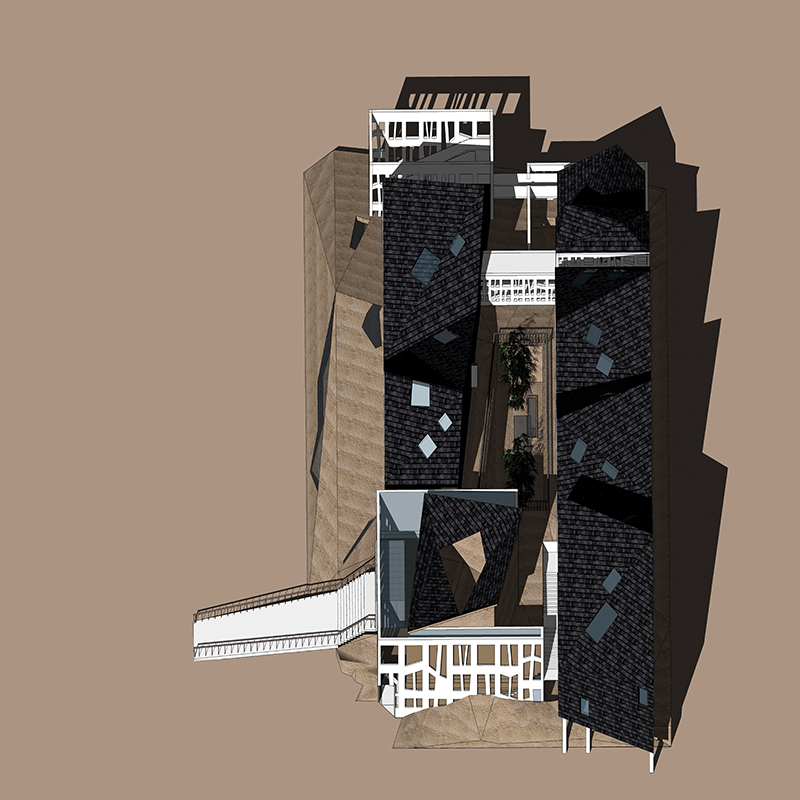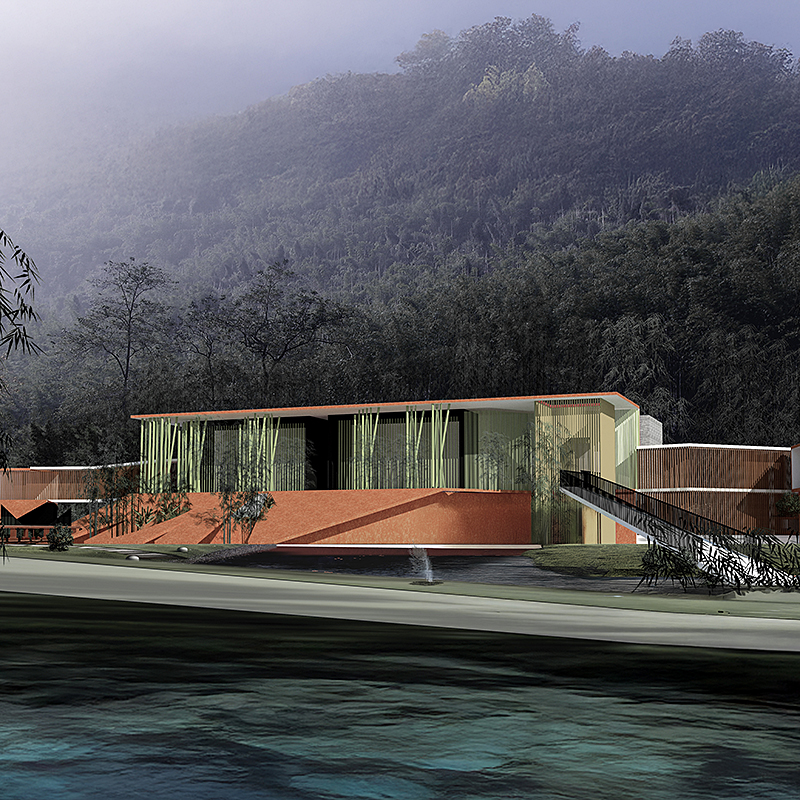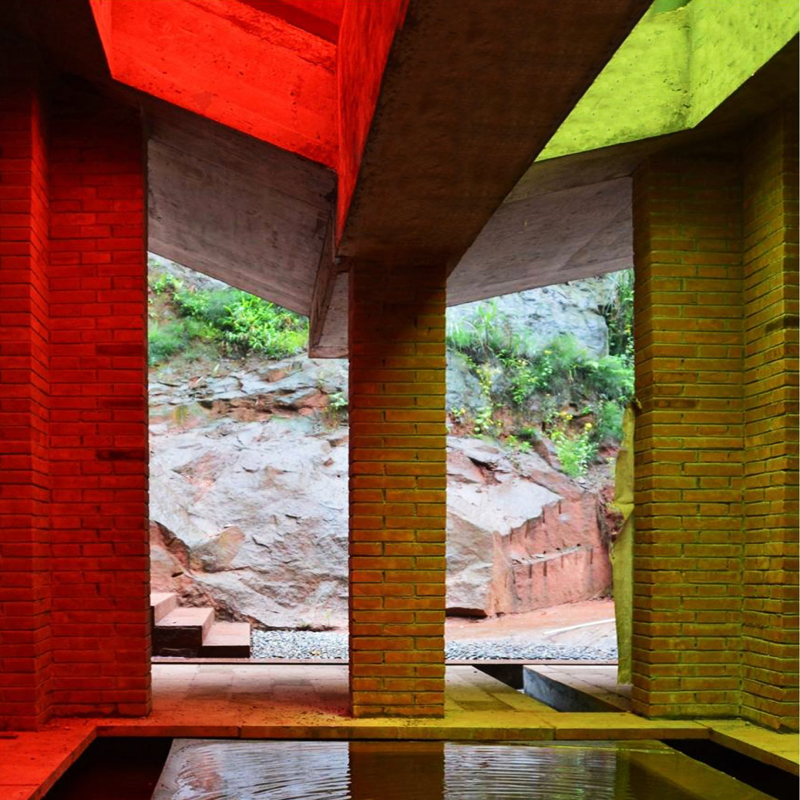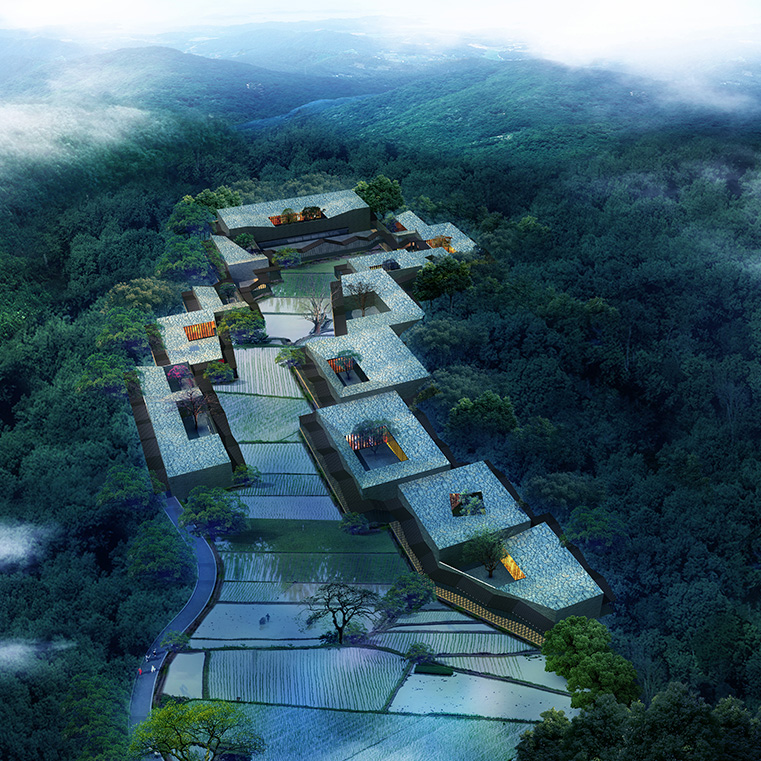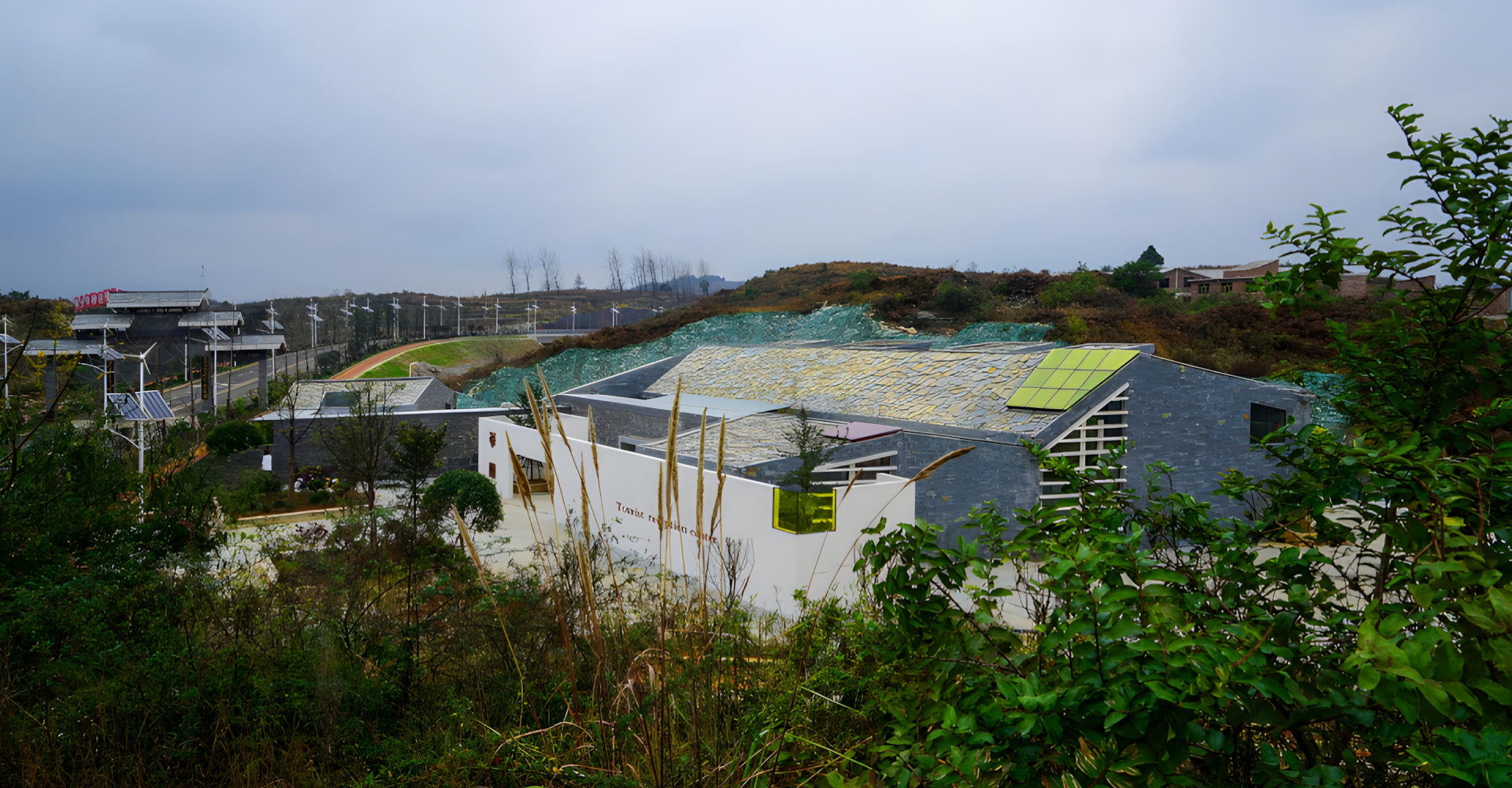
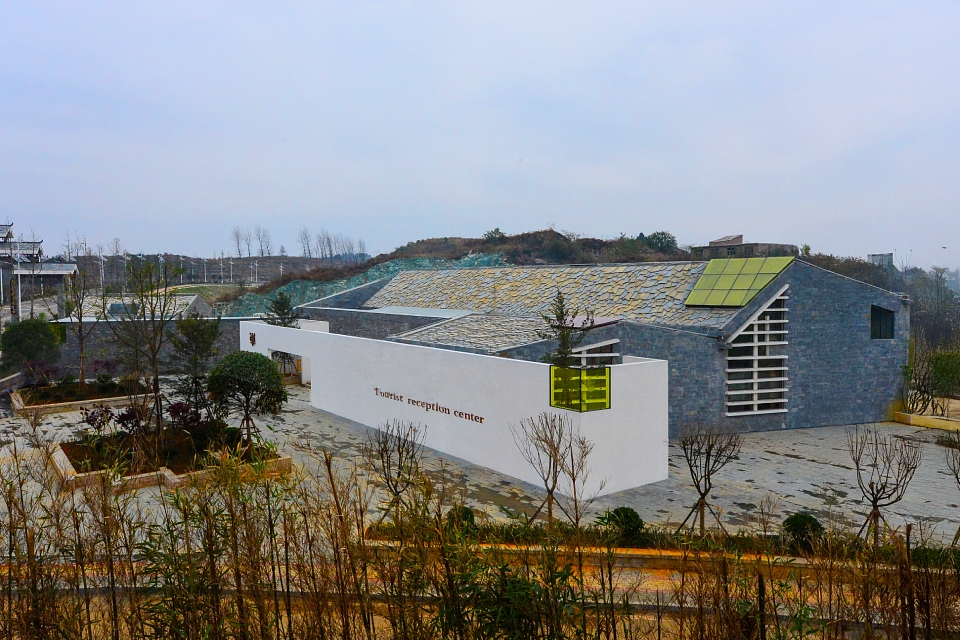
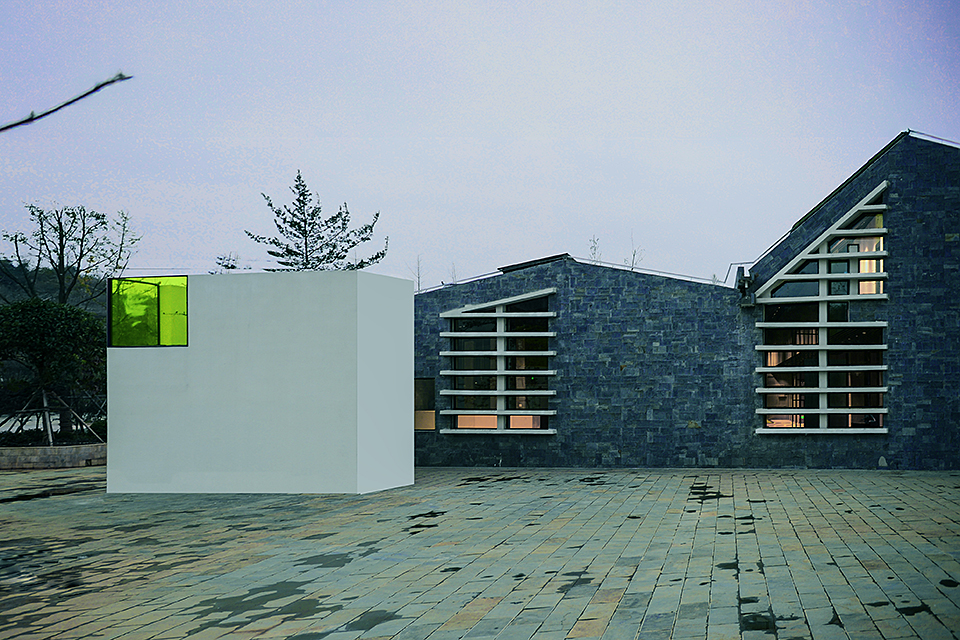
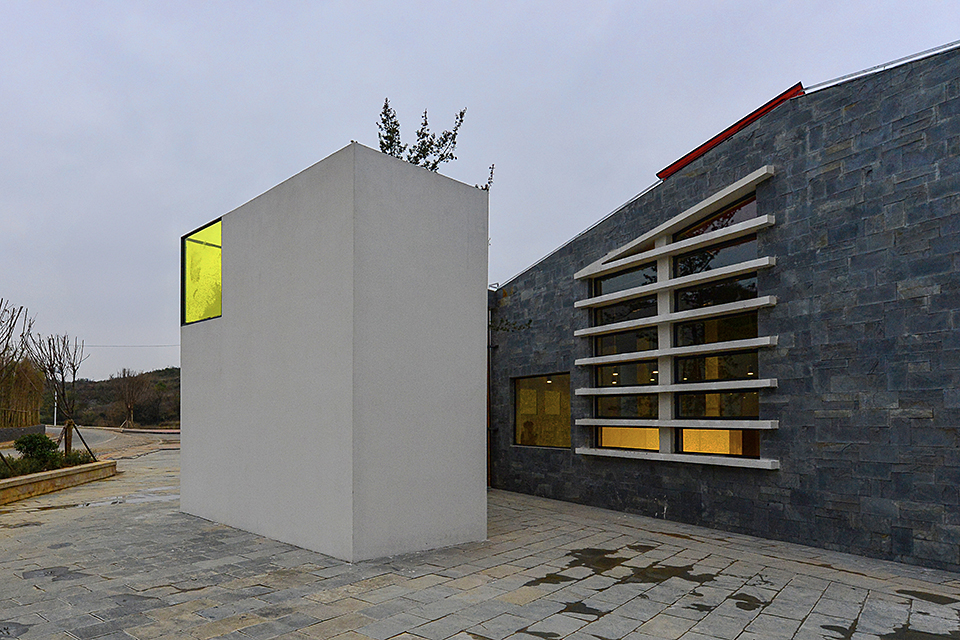
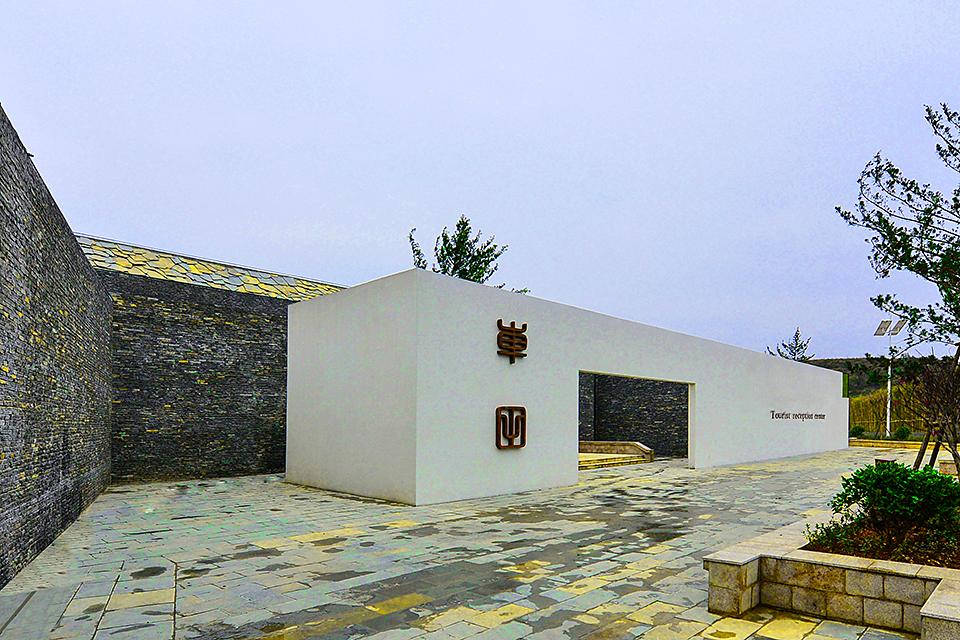
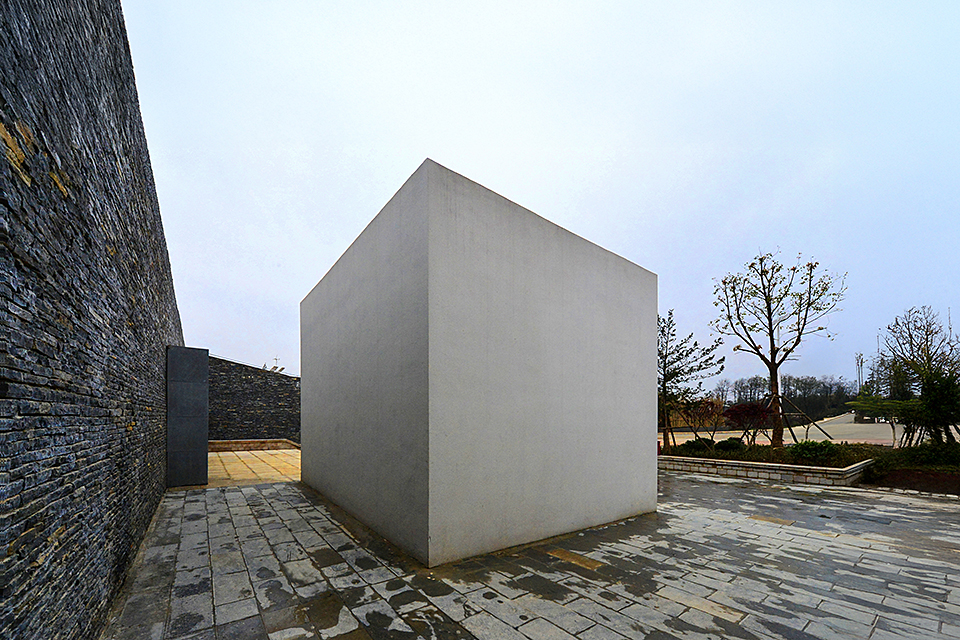
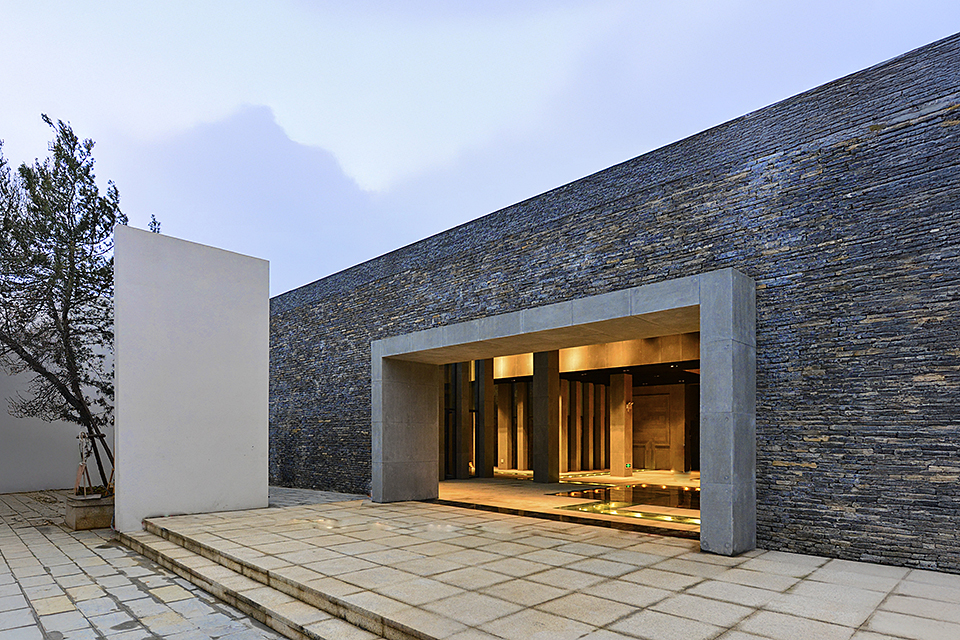

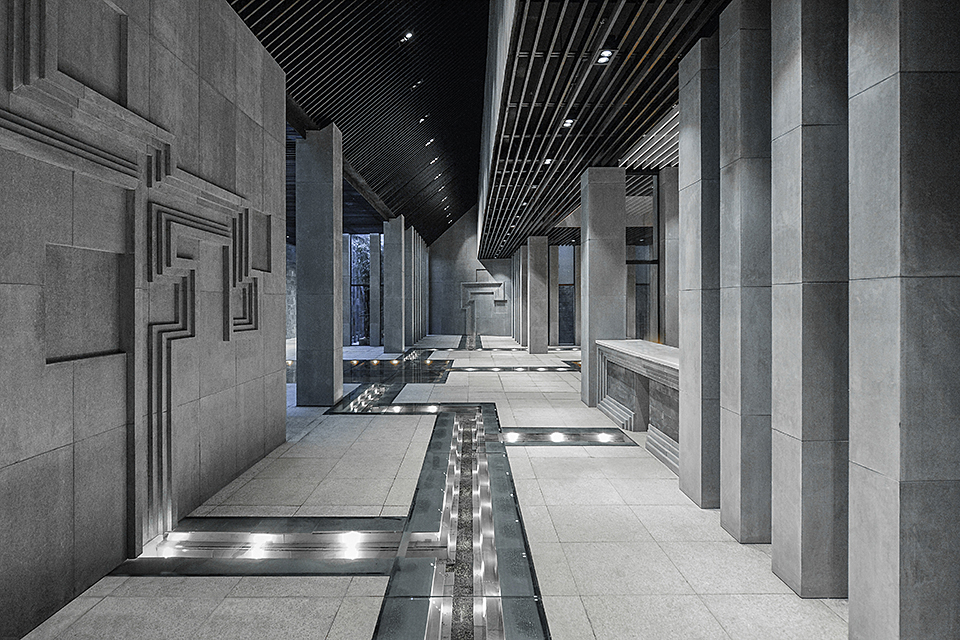
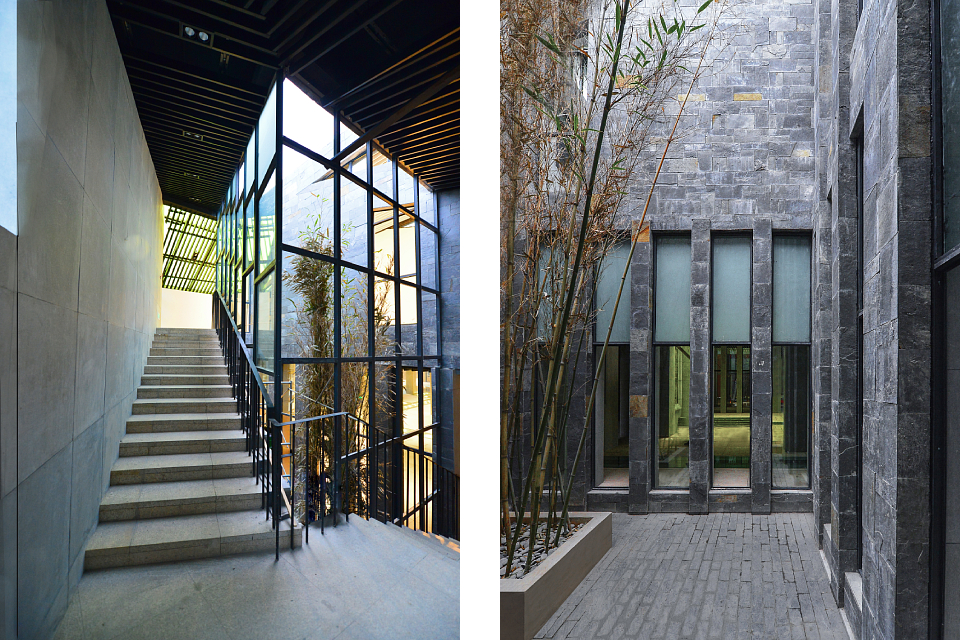

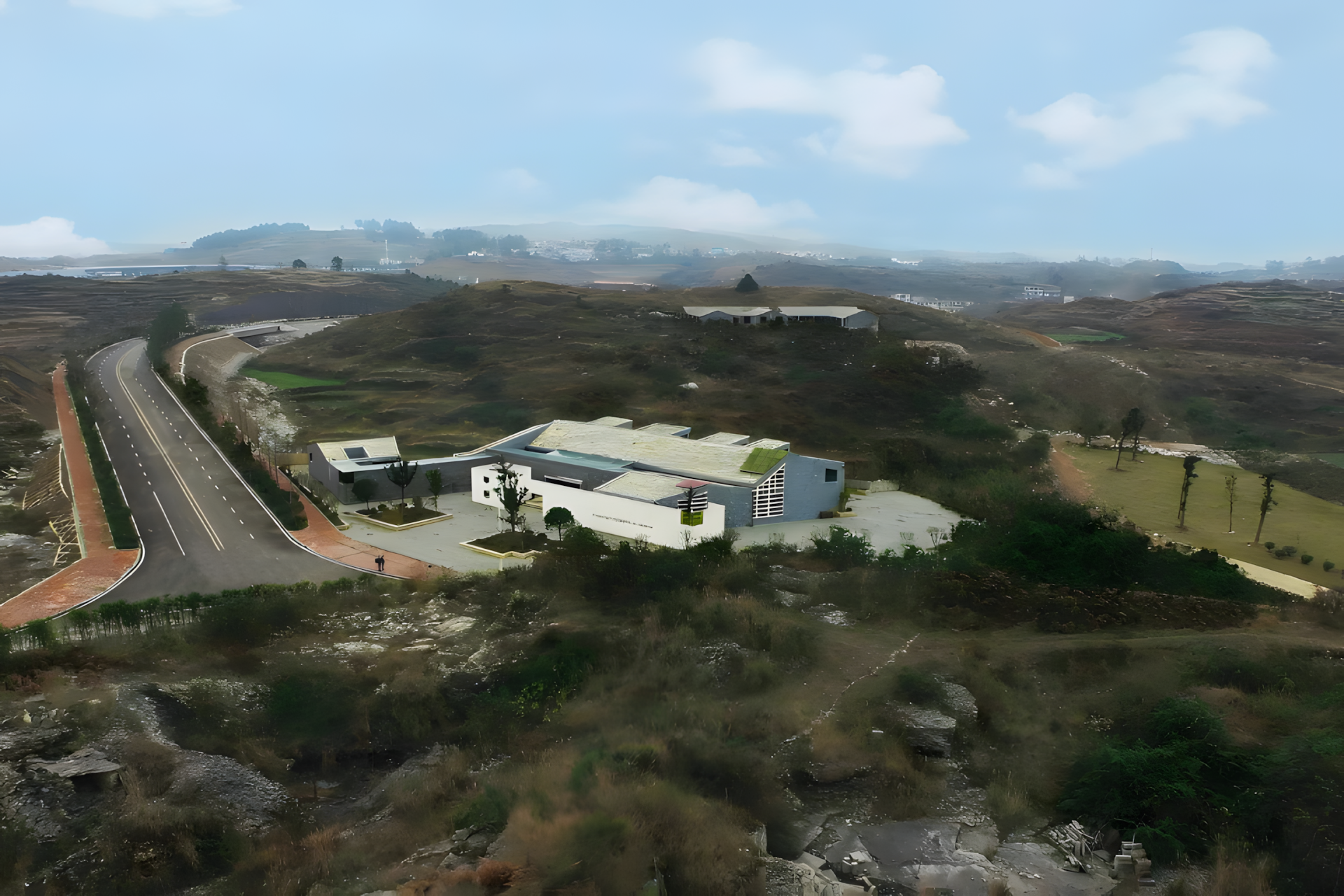

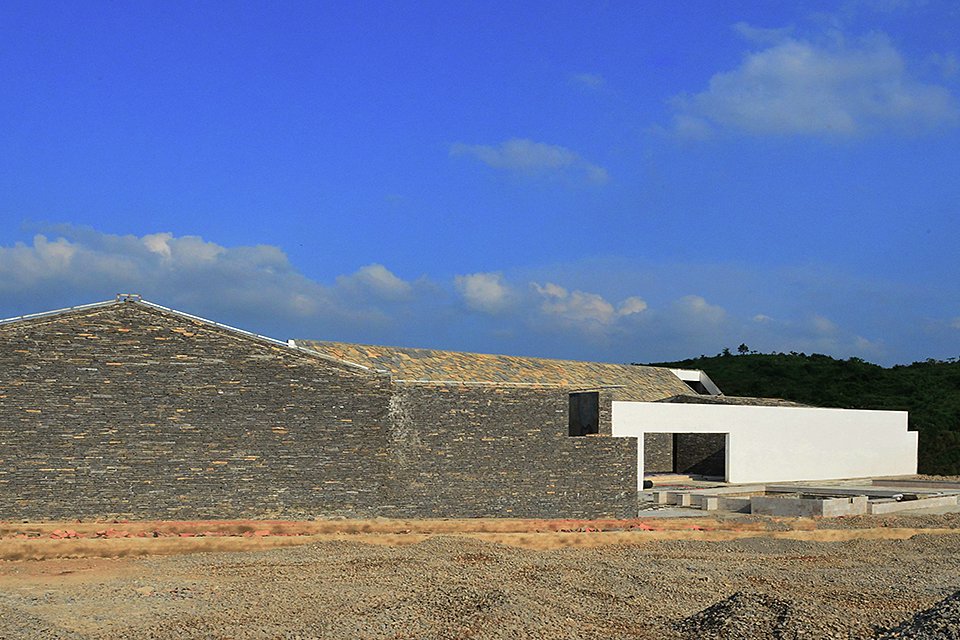

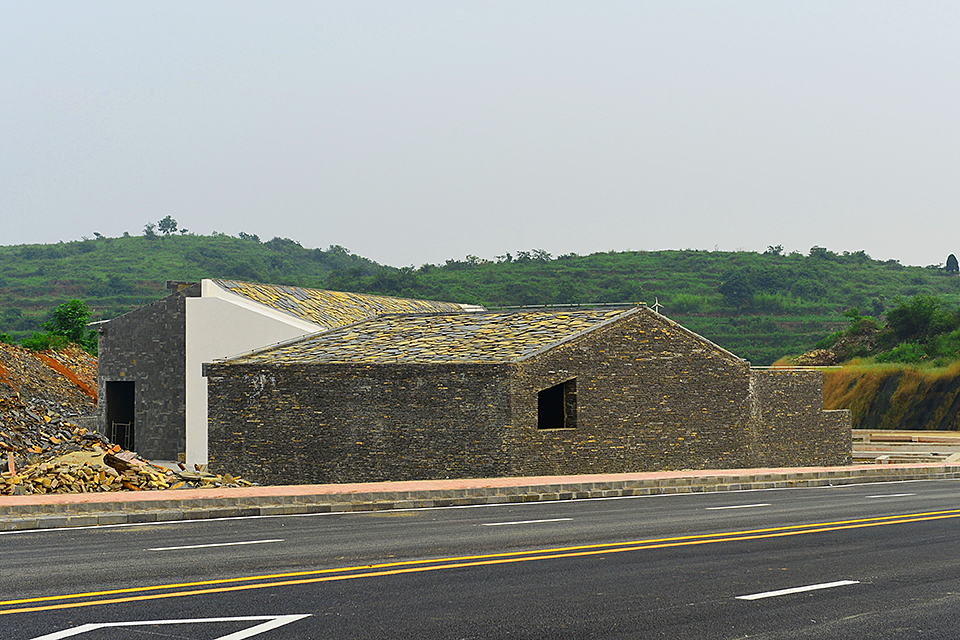
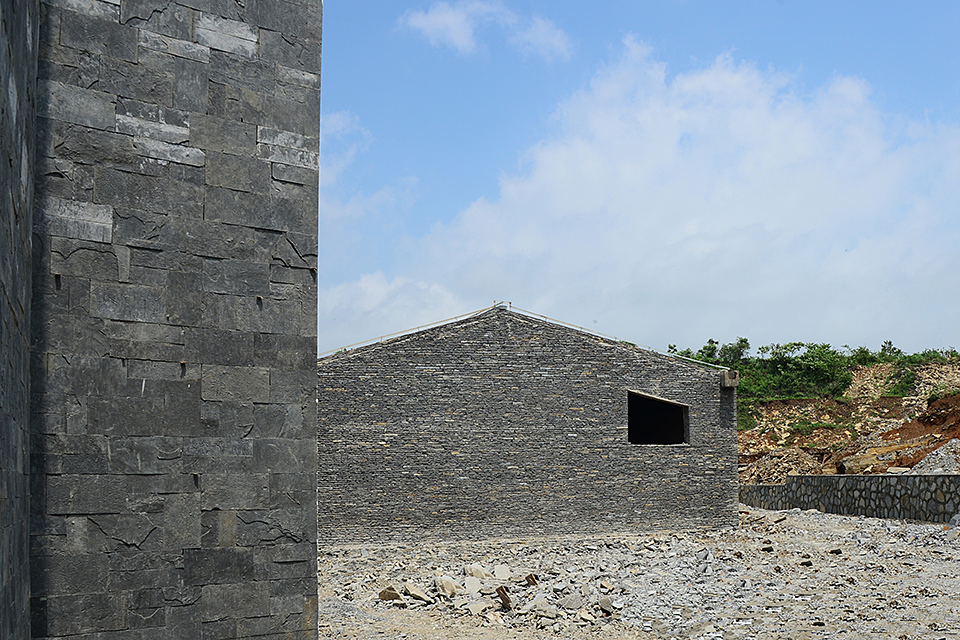
Located in Chetian Village, a stone settlement nestled within Karst mountainous landscape, this project is deeply embedded in the unique logic of terraced settlements. The architectural generation stems from the abstract reconstruction of three typical local spatial typologies—the "White Courtyard," the "Stone Lane," and the "Stone Hall"—aiming to construct a functional complex that integrates tourist reception, cultural exhibition, and sacrificial rituals. These spatial prototypes establish a sequential, isomorphic system: from the meandering alleys serving as galleries to the profound halls acting as ritual cores, every element follows the traditional tectonic laws of the village. This allows sacred ceremonial sites and everyday cultural exhibition spaces to interweave and permeate one another. Here, the installation imagery of regional memory engages with contemporary visitor life, collectively shaping a public architectural space that possesses both a profound sense of historical ritual and an authentic cultural experience.

Copyright © 2025 West-line studio. All Rights Reserved|Privacy Policy|Prerms of Service